
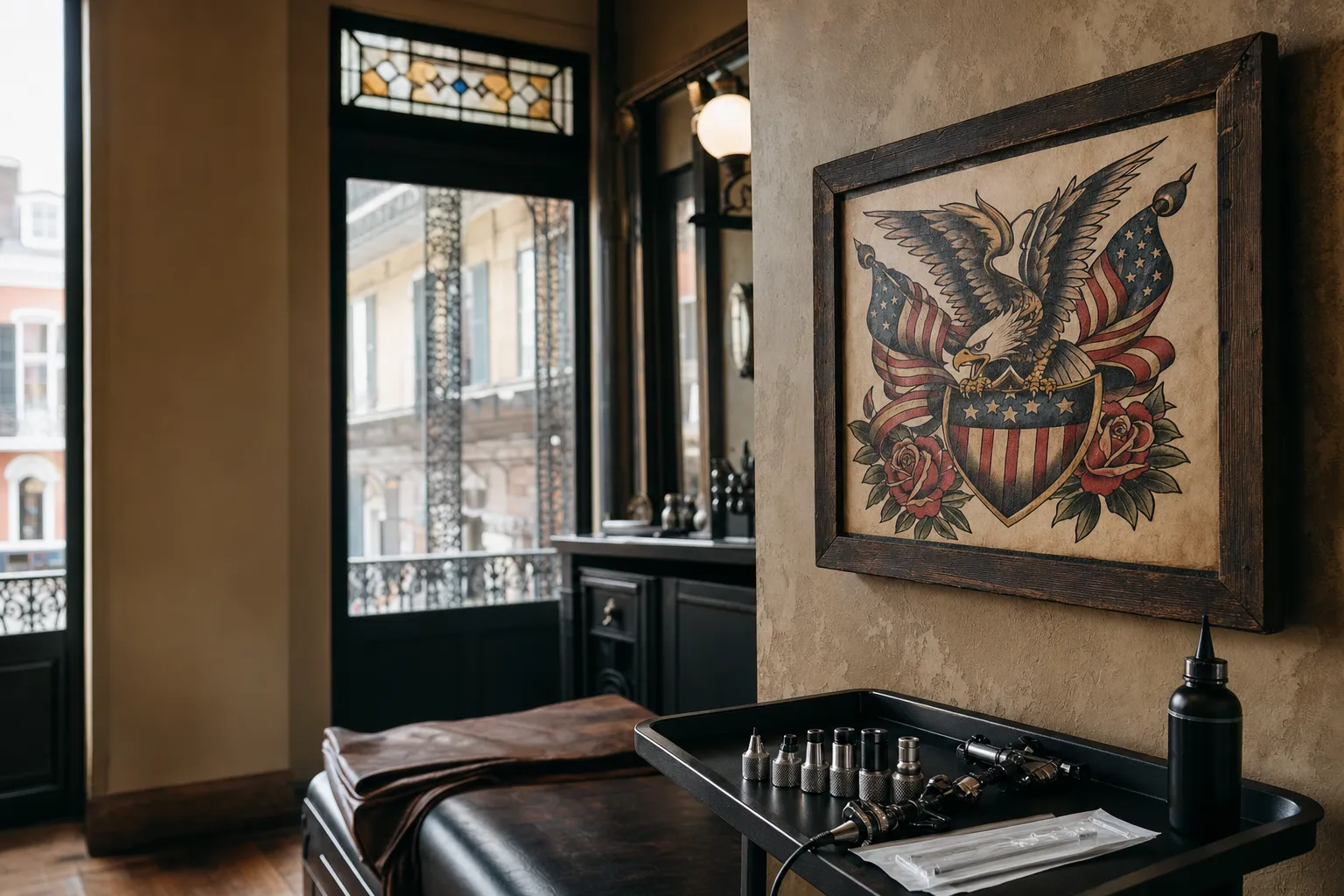
To photograph a tattoo well in Chalmette, wait until the skin is healed, use soft natural light, and take both close ups and context shots so detail and placement are clear. Below we explain the safest timing, phone and camera tips, location ideas around Chalmette, and what to avoid while your tattoo is still healing.
When to photograph your tattoo
Shoot for photos after the peeling phase is complete and the skin looks settled. Fresh tattoos are swollen and scabby, and photos taken during the first week will not show final line work or shading accurately.
If you are unsure about timing, follow the aftercare plan your artist gave you, and read our guidance on tattoo aftercare for healing milestones and do not rush detail shots during the early healing window.
Quick camera tips for phones and mirrorless cameras
- Choose soft, even light. Shade or overcast daylight reduces glare and shows detail. Avoid harsh midday sun, which flattens color and creates blown highlights.
- Steady the shot. Rest your forearm or phone on a stable surface, or use a simple tripod for a camera. More stable shots capture finer line work without artificial sharpening.
- Get multiple distances. Take a close macro or tight crop to capture texture and fine lines, and take a wider shot to show placement on the body.
- Mind the angle. Photograph tattoos at the same angle the skin sits naturally. For curved areas like biceps or calves, a slight three quarter angle gives a realistic view of proportion.
- Use natural color and minimal editing. Slight exposure and contrast adjustments are fine, but heavy filters will misrepresent color and value. Save an unedited file for reference.
Where in Chalmette to photograph tattoos
Chalmette offers clean, quiet spots that work well for personal photos, and they are handy if you want contextual shots that include local landmarks without crowds.
- Shaded sidewalks near the Chalmette Battlefield Park for historic backdrops and soft light.
- Riverside benches along the Mississippi for golden hour portraits with a simple horizon line.
- Neighborhood parks and covered pavilions that provide consistent shade and neutral backgrounds.
Watch out: Do not photograph a tattoo while it is still bandaged, actively weeping, or scabbed. Flash photography and excessive stretching of healing skin can irritate fresh ink and slow recovery. The Louisiana Department of Health regulates sanitation and licensing for tattoo studios, and following proper aftercare keeps your tattoo safe to photograph when it looks its best.
What to bring and how to prepare
Preparation checklist
- Healed skin and clean, moisturized surface for a fresh but not oily look.
- Loose, easy to remove clothing that shows the tattoo without causing friction.
- A plain cloth or neutral backdrop for close ups when you need to isolate the artwork.
- Your artist reference photos, in case you want similar framing for portfolio shots.
How we at Salon De Tatouage help your tattoo photograph well
We design tattoos with placement and long term clarity in mind, whether you choose photo realistic tattoos or fine line work. Our artists advise on scale, contrast, and placement so the finished piece will read on camera and in person.
We are based in the French Quarter, and our New Orleans studio sees many visitors who want photos that capture both the tattoo and the city sense. If you want tips specific to a design or placement, ask your artist while your piece is settling.
Key takeaway
Wait until your tattoo is healed, use soft daylight and steady framing, and take both detail and context shots so the artwork and placement are clear. Follow aftercare first, then photograph with gentle light and minimal editing for the most faithful results.
Frequently asked questions
When is a tattoo fully healed for photography?
Most tattoos move past the visibly peeling stage in two to four weeks, but full settling of color and fine lines can take longer. For clear detail photos, wait until the skin is smooth and not flaky. If you followed the aftercare instructions from your artist, that timeline is a reliable guide.
Can I use my phone camera or do I need a DSLR?
Modern phone cameras are excellent for tattoo photos. Use natural light, steady your hand, and take multiple frames. A mirrorless or DSLR lets you control depth of field and capture higher resolution close ups, but it is not required for good results.
Should I use flash for tattoo photos?
Avoid on camera flash for detail shots. Flash can wash out shading and create hotspots. If you must use artificial light, diffuse it with a softbox or use bounced light so the tattoo appears even and true to tone.
How should I edit tattoo photos for social media?
Keep edits minimal. Correct exposure and color balance, crop for composition, and avoid heavy filters that change tones or contrast. Preserve one unedited copy for records or touch up discussions.
Do tattoo artists photograph the work for portfolios?
Some artists document finished work for portfolios. Our artists plan designs to photograph well and will advise on framing and timing. Ask about portfolio photos at the studio visit if you want professional documentation of the piece.
Want to learn more or read examples?
Read our guidance on photo realism expectations and how tattoos photograph for different styles, and check our New Orleans studio page to learn about the kinds of work our artists do. You can also view client reviews and directions on our Google Business Profile.