
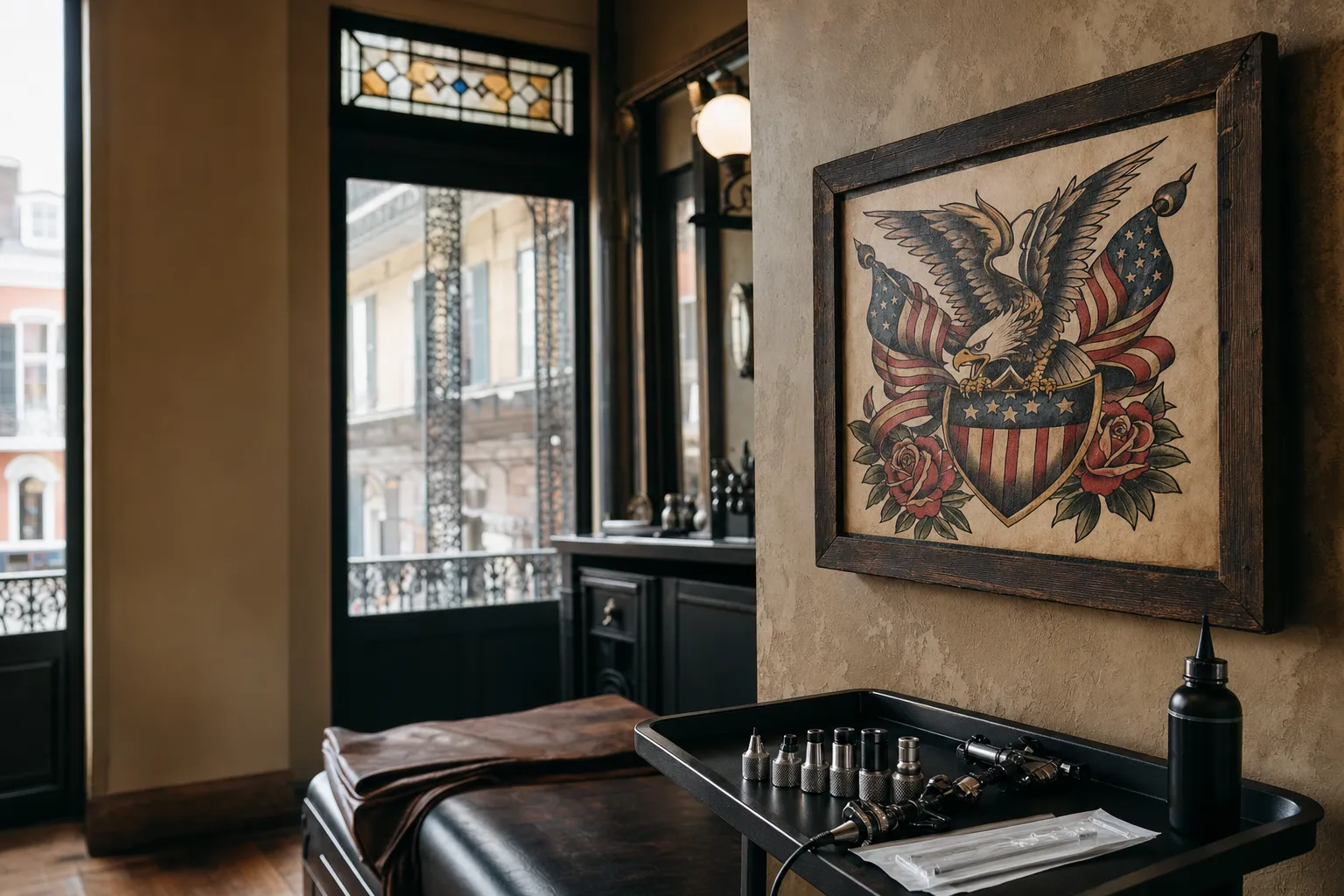
Size dictates how much realistic detail we can include. For photo realistic tattoos in the Lower Garden District we tell clients that bigger pieces hold finer detail and subtler shading, while very small pieces lose definition as they heal and age.
Why size matters for photo realistic tattoos
Photo realistic work depends on tiny shifts in tone, crisp edges and smooth gradients. To reproduce a photograph or lifelike portrait we need room for shading, contrast and overlapping lines. When a design is too small, those elements blur together during healing and over the years.
We balance three things when we recommend size: the level of detail you want, the placement on your body, and how the piece will age. That balance helps us decide whether a design belongs as a mid sized forearm piece, a larger upper arm tattoo, or a fuller back or chest canvas.
How we plan size and detail at the studio
Our process is collaborative. We translate your reference, whether a photo, a family portrait or an architectural image, into an artwork that works on skin. The steps below show how we turn a reference into a tattoo that keeps its character as it heals and with time.
- Initial review. We evaluate the reference and discuss which parts are essential. We point out elements that need to be simplified for clarity on skin.
- Scale test. We make scaled mockups and stencils to show how much detail survives at different sizes and placements.
- Needle and technique plan. We choose needle groupings, shading methods and black and grey versus color approaches based on the chosen size.
- Placement and movement check. We inspect the chosen area for curvature and motion, since joints and high friction zones affect fine lines.
- Healing and longevity notes. We explain how aging, sun exposure and touch ups influence long term clarity, and plan line weight accordingly.
Placement, skin and how they change detail
Not all skin behaves the same. Areas with thin skin and little fat, like the top of the hand or the ankle, tend to spread and soften detail faster than thicker, flatter areas like the upper back.
What we check before deciding size
- Skin texture and elasticity at the intended placement.
- How much the skin stretches when you move.
- Proximity to joints, hair follicles and high friction zones.
- Existing tattoos or scars that could interfere with shading.
Because of these variables we sometimes recommend a slightly larger size than a client initially imagines. That extra room preserves small highlights and sharp edges through the first year of healing and beyond.
Fine line details versus bold realism
Fine line work and photo realistic shading are related but different. For single hair fine lines we use tighter needle groupings and keep designs small and delicate. For full photo realism we use a mix of micro lines and soft shading, and that usually needs more surface area.
Pro tip: If you like delicate, photo inspired details but prefer a small tattoo, consider focusing on one small focal element from the reference, rather than compressing an entire scene into a tiny space.
Common tradeoffs and what good looks like
Choosing size is about tradeoffs. Here are common scenarios we discuss with clients.
- Want a lifelike portrait to keep facial detail? We suggest a larger chest, back or thigh placement.
- Want a small, meaningful symbol with realistic shading? We simplify the image and preserve one or two high contrast details.
- Want a souvenir style New Orleans scene on a wrist? We recommend a stylized approach rather than strict photo realism so lines hold up.
Pros
- Larger tattoos preserve tonal range and crispness.
- Appropriate needle choices improve longevity.
- Placement planning reduces distortion over joints.
Cons
- Very large pieces require more sessions and healing time.
- Small pieces may lose subtle shading with time.
When photo realistic detail can go wrong
Watch out: Compressing a highly detailed photograph into a very small tattoo often leads to muddy lines and loss of subject recognition after healing. If a design depends on tiny highlights or faint texture, we will advise resizing or simplifying rather than risk a poor long term result.
We also avoid placing high detail where skin regularly rubs clothing or where sun exposure is intense unless you accept more frequent touch ups.
Questions we ask you during the consultation
These questions help us set the right scale and approach for a photo realistic piece.
- Which parts of the reference are most important to you?
- How visible do you want the tattoo to be day to day?
- Are you willing to schedule multiple sessions for larger work?
- Do you have existing tattoos nearby that we should match in tone and style?
How to prepare and what affects healing
Good pre and post care preserves detail. We advise sensible skin care and sun protection before and after your session. That makes the final shading hold better and reduces the need for early touch ups.
Our shop uses clean, all disposable practices and experienced artists who match technique to size and skin type. That combination helps photo realistic work age more predictably in New Orleans humidity and sun.
Related pages and further reading
Learn more about scale and design on our Size And Detail topic page. See examples of our approach to lifelike work on the Photo Realistic Tattoos service page. For local context and directions, check our New Orleans location page.
Frequently asked questions
What minimum size do you recommend for a photo realistic portrait?
For a recognizable portrait with preserved facial features we typically recommend at least palm size on flatter areas, often larger for faces with lots of small details. Exact size depends on the reference and placement, so we review the image with you before deciding.
Can fine line details be added later if a tattoo fades?
Yes, we can add crisp lines in a touch up session, but you should expect some limits. If the original piece was too small for the intended detail, corrections help but cannot fully restore lost tonal range.
How does sun exposure affect fine details?
Sun breaks down pigments and softens contrast. We recommend diligent sunscreen on healed tattoos and caution against prolonged direct sun during the first year to protect fine highlights and subtle shading.
Do you do small photo realistic souvenir tattoos for visitors to the French Quarter?
We offer smaller, stylized souvenir tattoos and advise simplifying complex photos to preserve clarity. If a client wants true photo realism, we discuss appropriate scale and session planning to achieve a lasting result.
Key takeaway
Size is the single most important factor in how much photo realistic detail we can capture and keep. We recommend the smallest size that still preserves your design cues, choose needles and shading to match the skin, and plan placement to reduce distortion as you move and age.
Learn more and see our work
Read client examples and advice on our Size And Detail topic page, view photo realistic examples on our Photo Realistic Tattoos service page, and find directions on our New Orleans location page. You can also check our Google Business Profile to read reviews and get directions.