
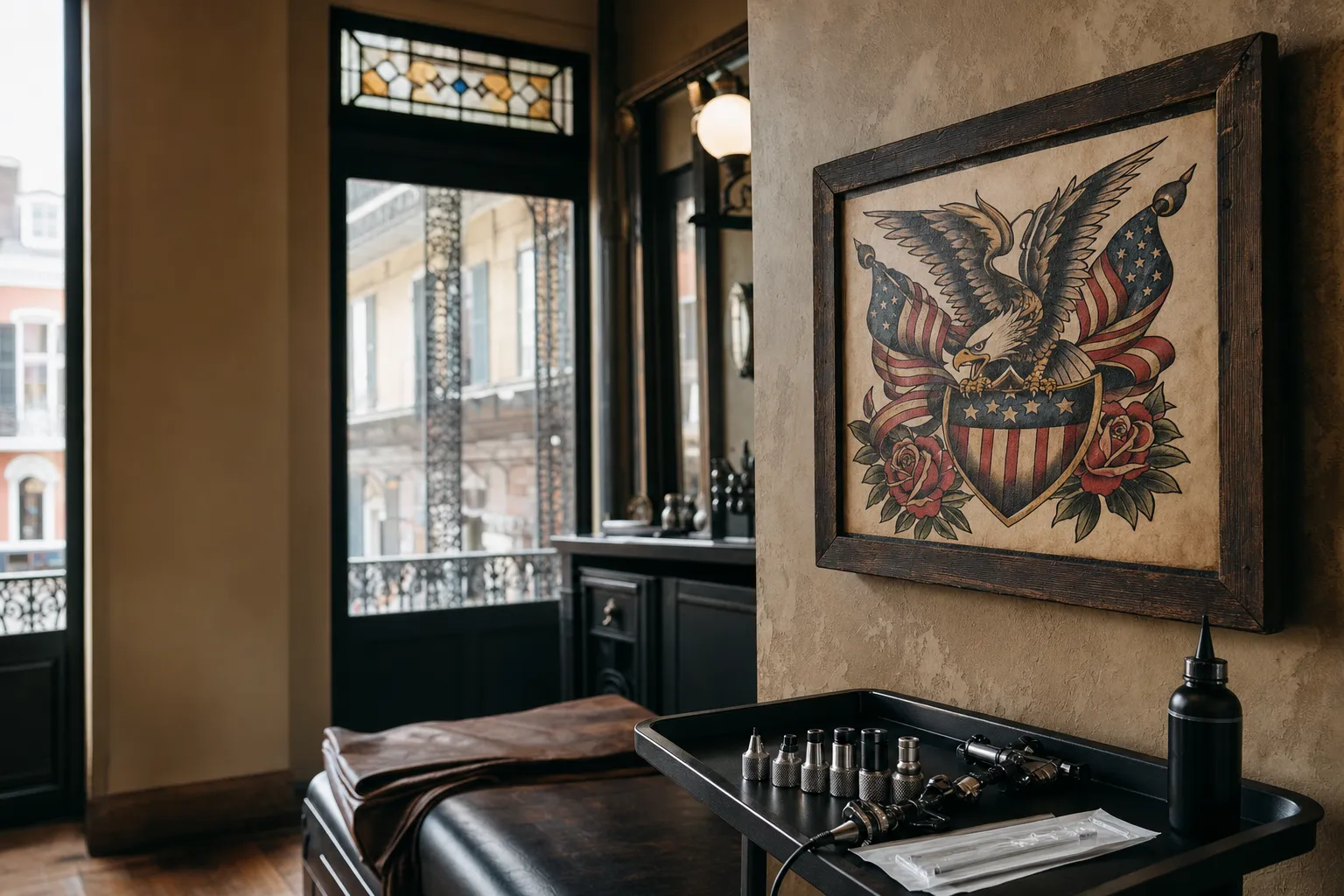
Start by collecting three references: a style you like, a placement on the body, and a personal meaning or story you want the tattoo to carry. Once you have those, we can translate them into a design that fits your anatomy and the technique you want.
What is design inspiration for tattoos
Design inspiration is the mix of visual reference, personal meaning, and technical choice that guides a finished tattoo. It can come from photographs, flash sheets, art movements, architecture, family stories, or local culture. For tattoos we think about inspiration differently than for other art, because the final piece must work on moving, living skin and last for years.
Why design inspiration matters in New Orleans
Design choices matter more than they look at first. In New Orleans, a design that nods to local culture will read differently on Bourbon Street than it does in the Garden District. Placement, scale, and line weight affect how a design ages in humid weather, and color choices will behave differently under frequent sun exposure.
We draw on our experience in the French Quarter to help clients choose imagery that fits the city and the wearer. That might mean simplifying a complex photo for a small hand tattoo, or choosing black and grey for a piece that will see a lot of sun.
Key concepts to know before you look for inspiration
- Style. Fine line, American traditional, black and grey, or photo realistic each call for different references and technical approaches.
- Placement. Curves and movement of the body change how a design reads. A sleeve needs flow, a hand tattoo needs strong, simple shapes.
- Scale and detail. Tiny tattoos need bold, clear forms, while larger canvases allow for finer shading and texture.
- Color and contrast. Pigments react to skin tone and sun. We choose palettes that age gracefully.
- Reference quality. High resolution photos or clear sketches help an artist translate an idea without guessing.
How we recommend you start looking for inspiration
Begin with a short, focused collection rather than an endless folder of images. Bring three to seven strong references that convey style, subject, or composition. We use those to understand what you like without copying someone else verbatim.
- Collect styles. Save one or two images that show the line work or shading you prefer. Link one to the Fine Line Tattoos page if you know you like that approach, or to our Custom Tattoos page when you want something unique.
- Choose placement. Note where on the body you want the piece. If you plan for a sleeve, include a few sleeve references so we can discuss flow and continuity.
- Note the meaning. Write a sentence about why the design matters. That helps us make choices that feel intentional rather than decorative.
Common sources of inspiration and how to use them
Not all references are equal. Here are common starting points and what they tell us.
- Photographs. Great for portraits or photo realistic work, but expect simplification. See our Photo Realistic Tattoos page for expectations about likeness and detail.
- Flash and studio work. Good for motifs and traditional imagery. Flash can be adapted, but we will redraw to make it yours.
- Fine art and prints. Use artwork for composition ideas, but plan to alter line weight for skin.
- Architecture and local motifs. New Orleans symbols like fleur de lis, jazz imagery, and ironwork inspire patterns that translate well into custom designs.
How we turn references into a finished design
We balance your references with technical judgment. Our process typically looks like this so you know what to expect.
- Conversation. We talk about your references, placement, and lifestyle. That helps us select a suitable style.
- Rough sketches. We produce a few thumbnail ideas that explore composition and placement.
- Refinement. We combine the strongest elements into a single, original drawing that respects the reference material and legal considerations.
- Stencil and fitting. Before your appointment, we adjust scale and curve with stencils so the design sits naturally on your body.
Checklist for a productive design consult
What to bring
- Three to seven reference images that show what you like.
- A note about placement and any past tattoos we should match or work around.
- An idea of style preference, for example fine line or black and grey.
- Questions about healing, maintenance, or visibility for work and travel.
Photo references, copyright and originality
We will not copy another artist's tattoo or a protected image. Photographs and artwork are valuable as reference for style or composition, but we always create an original piece that draws on your references without duplicating someone else s work. That protects your tattoo and respects other artists.
Comparing inspiration types
| Source | Best for | Limitations |
|---|---|---|
| Photograph | Portraits, realistic detail | Needs simplification for skin, may lose detail at small sizes |
| Flash sheet | Traditional motifs, quick small pieces | Often needs redraw to be unique |
| Fine art | Composition, texture ideas | May not translate directly to wearable scale |
Pro tip: When pinning references, include notes about what you like in each image. That helps us make targeted adjustments instead of guessing.
Design choices by service
Different services ask for different reference sets. If you are considering a sleeve, use multiple images that show flow and thematic links. For a fine line piece, provide close ups of line work and negative space. For custom work, bring stories, sketches, or objects that matter to you so we can incorporate them into a single composition.
See our pages on Fine Line Tattoos, Custom Tattoos, and Sleeve Tattoos for examples of how reference photos guide each approach.
Local considerations around New Orleans and nearby neighborhoods
Humidity, sun, and local fashion trends influence longevity and visibility. We use black and grey or heavier line weight when a design is likely to be exposed to sun on a regular basis. If you are visiting from nearby areas or Terrytown, a short trip to the French Quarter gives you access to our portfolio and in person advising before you commit to a larger piece.
For help evaluating portfolios, our topics pages on reading portfolios and first tattoo guide explain what to look for in artist work and studio hygiene.
Helpful external resources
For design fundamentals and composition, university art departments offer strong overviews of line, shape, and contrast. The Bureau of Labor Statistics provides data on tattoo artist employment and industry trends that can help you understand who is working professionally in the field.
Recommended reading from authoritative sources:
- Bureau of Labor Statistics: Tattoo Artists for industry context and employment trends.
- Maryland Institute College of Art resources on composition and design for fundamentals that apply to tattoo design.
Key takeaway
Keep your inspiration focused. Bring a small set of strong references that show style, placement, and meaning. We will use those as the starting point to create an original design that fits your body, your lifestyle, and the techniques you prefer.
Frequently asked questions
How many reference images should I bring?
Bring three to seven images that capture the look and feeling you want. We prefer quality over quantity. A few clear references let us identify the essential elements and combine them into something unique.
Can I bring a photo of someone else s tattoo?
You can bring it for inspiration, but we will not copy another artist s tattoo. We will redraw elements so the final piece is original and tailored to you.
What if I only have a vague idea?
Vague ideas are fine. Tell us the mood or story you want to express and we will sketch options. Our artists specialize in turning a concept into a clear visual plan.
Do references change the price or session time?
The complexity of the final design influences time and cost. Clear references help us estimate more accurately, but the final length of a session depends on size, detail, and placement.
Learn more and find us
Read our full Design Inspiration topic to see examples and deeper guidance, view our service pages for style specific notes, or check our Locations page to find the studio. For people visiting New Orleans from nearby areas like Terrytown, our French Quarter studio offers portfolio review and design consultations in person. You can also view reviews and get directions on our Google Business Profile.