
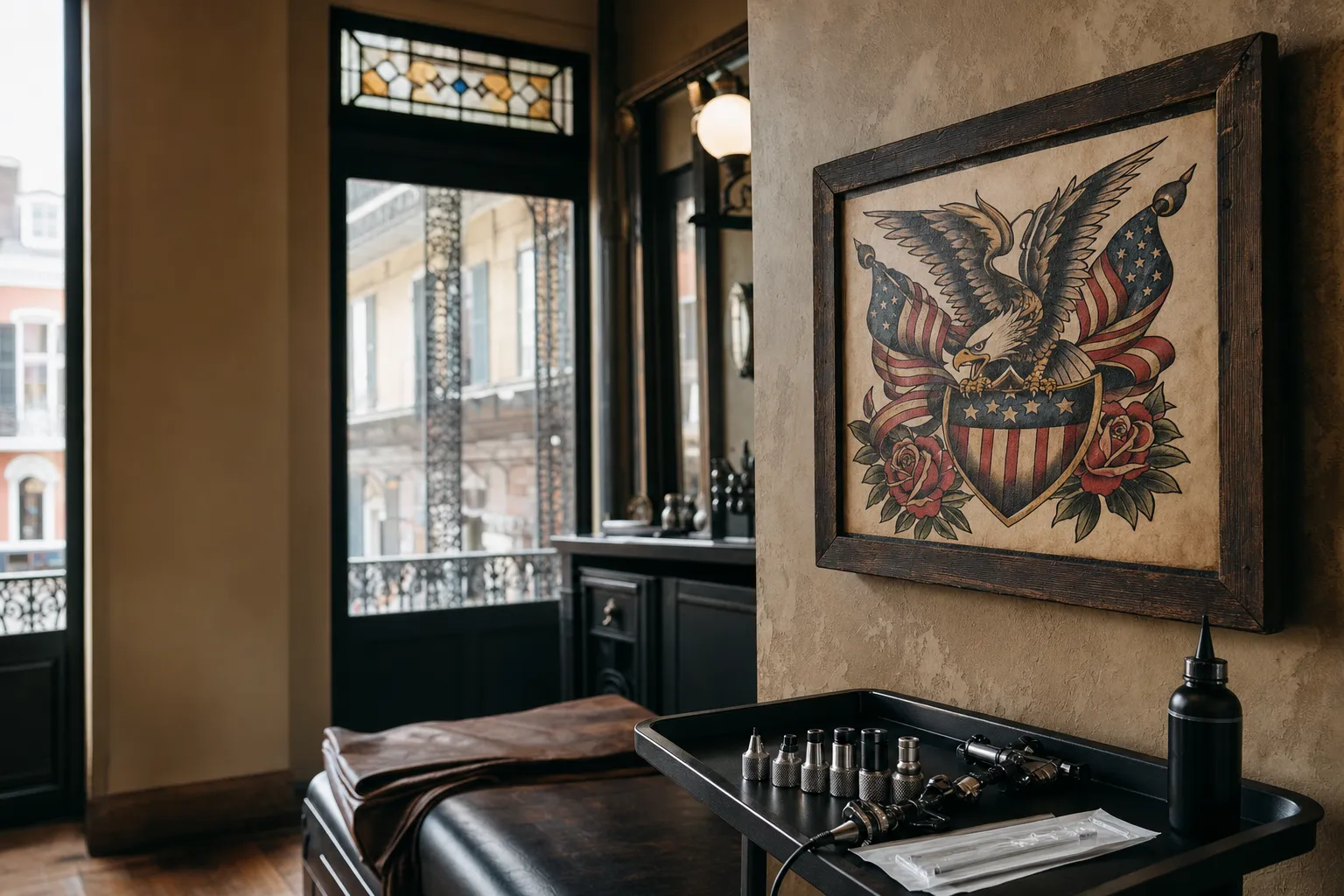
For a new custom tattoo we recommend a gentle fragrance free cleanser, a thin layer of a water based healing ointment for the first few days, then a fragrance free lotion until the tattoo is fully healed, and broad spectrum sunscreen on healed ink. At Salon De Tatouage we tell clients exactly which product types to bring and why each matters for different styles of work.
What are tattoo aftercare products
Tattoo aftercare products are the creams, ointments, cleansers and lotions you use while a tattoo heals. They control moisture, prevent excess scabbing, reduce irritation and protect pigment. Different products do different jobs at each stage of healing.
- Gentle cleansers. Mild soap or liquid cleanser to remove excess ink, plasma and debris without drying the skin.
- Healing ointments and balms. Thicker products used early to keep the tattoo moist while the skin starts to close.
- Fragrance free lotions. Lighter moisturizers for the middle and late stages of healing.
- Sunscreen for healed tattoos. Broad spectrum sunscreen to protect pigment once the skin is fully healed.
- Silicone and scar products. For raised scarring or keloid risk, medical grade silicone gels or sheets can help after the skin has closed.
Why the right products matter locally
Timberlane and greater New Orleans have humid, sunny weather and frequent outdoor events. Humidity affects evaporation and scab formation, and sun exposure can fade fresh ink quickly after healing. Choosing the right aftercare helps tattoos settle cleanly in our climate and keeps color looking true longer.
We also see many visitors who get work in the French Quarter and then travel back to Timberlane. That means aftercare choices should fit a travel routine. Pack small containers of the same ointment and lotion you plan to use, and avoid new products while the tattoo is fresh.
For background on tattoo practices and healing, see the general overview of tattoos on Wikipedia.
Key concepts to know before you choose products
- Stage matters. Early healing needs more occlusion and protection. Later healing needs hydration and sun protection.
- Scent is a problem. Fragrance and strong additives can irritate sensitive, freshly tattooed skin.
- Texture and breathability. Thicker ointments block air but lock in moisture. Water based balms and lotions breathe more and suit longer term care.
- Skin type and placement. Thin skin on hands and feet reacts differently than thicker skin on shoulders. Fine line tattoos need different handling than bold sleeves.
- Consistency matters. Use the same brand or product family during healing to avoid reactions.
Product categories we recommend and when to use them
Gentle, fragrance free cleansers
Use a mild, fragrance free liquid soap to clean the tattoo twice a day for the first week. The goal is to remove surface debris and prevent buildup without stripping natural oils. Look for products labeled gentle, soap free, or for sensitive skin.
Water based healing ointments and non petroleum balms
For the first 48 to 72 hours a thin layer of a water based healing ointment or a purpose made tattoo balm can keep the wound moist while the outer skin begins to close. These products are thinner than petroleum jelly and reduce clogged pores. We use and recommend water based options for most clients because they balance moisture with breathability.
Fragrance free lotions
After the initial few days, switch to a fragrance free lotion to keep the area hydrated while the skin flakes and reforms. Use light, unscented lotions and apply sparingly to avoid over moisturizing and excess scabbing.
Silicone scar treatments
If a tattoo lifts or forms raised scar tissue later in healing, medical grade silicone gel can help flatten raised areas. Only begin silicone once the skin is fully closed and intact. If you have a history of keloids, tell your artist before the session so we can discuss risk.
Sunscreen for healed tattoos
UV exposure fades tattoo pigment. Use broad spectrum sunscreen with at least SPF 30 on healed tattoos when you are outdoors. Do not use sunscreen on open or healing skin.
Comparison of common aftercare product types
| Product type | When to use | Skin types | Notes |
|---|---|---|---|
| Water based healing ointment | First 2 to 4 days after tattooing | All, especially acne prone | Thin layer helps close the wound, less greasy than petroleum |
| Petroleum jelly | Occasional short term use in very dry skin | Very dry areas only | Can suffocate skin if used too long, avoid under heavy bandaging |
| Fragrance free lotion | Day 4 onward until healed | All, good for long term hydration | Choose lightweight formulas that absorb quickly |
| Silicone gel | After full closure for raised scars | Scarring or keloid tendency | Medical grade only, used as directed |
| Sunscreen | Only on healed skin | All | Broad spectrum SPF 30 or higher to protect pigment |
How to pair products with different tattoo types
Different tattoo styles call for different aftercare priorities. Below we explain how product choices support specific work we do at the studio.
Custom tattoos
Custom pieces vary in size and detail. For small custom work follow the basic progression: cleanser, short term water based ointment, then lotion. For larger pieces we advise using slightly more moisturizing products because larger areas lose moisture faster.
Fine line tattoos
Fine line tattoos have narrow lines and less saturation. Excessive swelling or heavy scabbing can blur detail. Use a lighter touch with ointment and move to a gentle lotion sooner to reduce thick scab formation. See our fine line tattoo guidance for specifics on preserving line work at ../../../services/fine-line-tattoos.
Sleeve tattoos
Sleeves cover large skin areas and often combine styles. For sleeves we recommend planning product amounts ahead of time, keeping the area well hydrated during the middle stages of healing, and applying sunscreen on healed areas to prevent fading. Learn more about sleeve care on our sleeve maintenance and sleeve inspiration pages.
Hand tattoos and high wear areas
Hands and fingers see friction and washing that can affect healing. Use minimal ointment and keep lotion available to rehydrate after washing. Hand tattoos may need a bit longer to settle pigments because of constant use.
For booking and design details related to custom tattoos, please see our Custom Tattoos page at ../../../services/custom-tattoos.
Packing checklist for clients traveling from Timberlane or visiting New Orleans
What to bring to your appointment and for the first week
- Small bottle of fragrance free cleanser sized for travel.
- Tube of water based healing ointment or the same balm we recommend at the studio.
- Travel size fragrance free lotion for after day three.
- Loose clothing that will not rub the tattoo area.
- Sunscreen for after the tattoo is healed.
Pro tip: If you plan to get work while visiting from Timberlane keep all products in your carry on or front bag. That way you can start the same aftercare routine the moment the tattoo is complete.
Key takeaway
Start with a gentle cleanser and a water based healing ointment for the first days, switch to a fragrance free lotion until healed, and use broad spectrum sunscreen on healed tattoos. Choose product textures based on placement and style, and stick with the same trusted products while the tattoo heals.
Frequently asked questions
What should I use on a fresh tattoo first day and why?
Use a gentle fragrance free cleanser to remove plasma and ink, then a thin layer of a water based healing ointment to keep the area moist without blocking air entirely. A thin layer reduces scabbing and protects the skin while it starts to close.
Can I use petroleum jelly on my new tattoo?
Petroleum jelly can be useful in very dry environments for short periods. It can also block air and trap bacteria if used too long. We prefer water based healing ointments for most clients because they balance moisture and breathability better.
When can I apply sunscreen to my tattoo?
Apply sunscreen only after the tattoo is fully healed and the skin is intact. Sunscreen protects pigment from fading, but it should never be used on open or healing skin.
Are scented lotions OK after healing?
We recommend avoiding scented products during the entire healing process. Fragrances can irritate sensitive skin. Once fully healed some clients choose fragranced products, but for pigment longevity we still suggest fragrance free formulas on exposed tattoos.
Do I need special products for fine line or photo realistic tattoos?
Fine line work benefits from lighter aftercare to avoid thick scabbing. Photo realistic tattoos often have areas of heavy shading that need steady hydration. In both cases pick products that are gentle and consistent across the whole healed area.
Find our studio and learn more
Read recent customer reviews and get directions from our Google Business Profile, and learn more about aftercare and tattoo services on our site.
See our locations page · Custom Tattoos · Tattoo Aftercare topic