
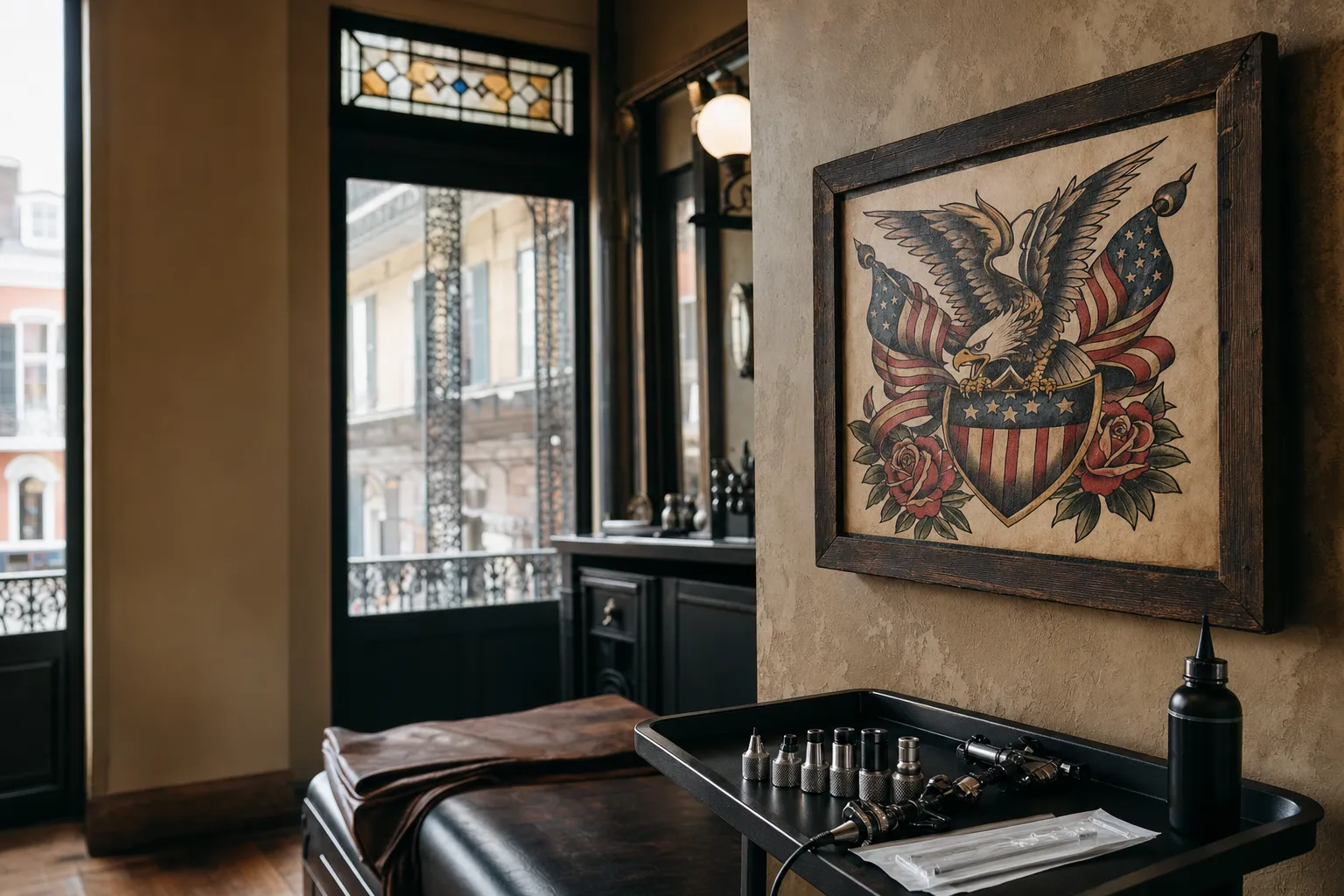
We tell clients that fine line tattoos usually show surface healing within seven to fourteen days, and full healing of the deeper layers typically takes about four to six weeks. In our experience at Salon De Tatouage, thin lines can look healed on day seven and still need more time to settle, and some pieces benefit from a touch up after eight to twelve weeks.
How we define the healing timeline for fine line tattoos
Fine line work uses thinner needles and less saturation than bold traditional pieces. That matters for healing because the skin receives lighter trauma and less ink in each pass. The result is a timeline that is often faster on the surface, and more delicate when the line work is settling under the skin.
We break the process into stages so clients know what to expect:
- Surface closure and scabbing, usually days one to seven.
- Peeling and flaking, often days five to fourteen as the top layer regenerates.
- Settling and color stabilization in the dermis, four to six weeks.
- Final check and touch up window, eight to twelve weeks if needed.
Week by week: what you will likely see
Days 1 to 3: fresh tattoo and immediate care
The area will be red, tender and slightly raised. You will see a thin clear plasma or light bleeding while the body starts to close the wound. Keep the area clean and follow the aftercare instructions we give at the studio so the skin can form a protective layer.
Days 4 to 14: scabs and peeling
Fine line tattoos usually form very light scabs or a thin flaky film. Peeling is normal. Avoid picking, shaving, or applying heavy creams that trap moisture, because interference at this stage risks loss of detail in delicate lines.
Weeks 3 to 6: settling and texture smoothing
After the surface looks healed, the pigment deep in the dermis continues to settle. Lines may appear faint at first and then deepen as swelling fully subsides. By week six most clients see the final look, though minor lightening or tiny gaps can remain.
Factors that lengthen or complicate healing
Some variables make fine line healing slower or less predictable. Watch for these common factors:
- Placement over joints, where skin stretches a lot, like the wrist or knuckles.
- Thin or sun damaged skin that heals unevenly.
- Excessive moisture or occlusive products that prevent proper scabbing.
- Active sun exposure before the tattoo is fully healed.
- Medical conditions or medications that affect skin repair.
Watch out: If you notice heavy swelling, spreading redness, pus, or increasing pain beyond the first few days, seek medical advice. Those signs suggest infection or a reaction that needs professional attention.
How we support healing at Salon De Tatouage
We approach fine line healing with both technique and aftercare guidance. Our artists use needle groupings and passes that minimize trauma, and we walk every client through a simple aftercare routine that protects delicate lines without over treating them.
When you get a fine line tattoo with us we provide written aftercare and discuss practical choices for the first two weeks, such as clothing, showering, and sleeping positions. For more detail on day to day care see our topic page on tattoo aftercare.
Pro tip: For fine line work, lighter ointments and short, frequent cleanings usually preserve crisp edges better than thick, prolonged coverings. Ask your artist which product they recommend for your skin type.
When to plan a touch up and what it involves
We evaluate most fine line pieces at eight to twelve weeks. If lines healed unevenly, have small gaps, or the ink settled too light in places, a targeted touch up can restore crispness. Touch ups are minor sessions that focus only on the problem areas, not full redraws.
Because fine line work is detail oriented, some small pieces need a second pass more often than bold work. That is normal and does not mean the original artist did anything wrong. Healing can vary by individual skin, placement, and aftercare choices.
How your choices before and after the appointment affect healing
Simple preparations make a big difference. Avoid heavy sun exposure and sunburn in the week before your tattoo, keep the area hydrated in the days leading up to your appointment, and get a good night of sleep. The healthier your skin and immune system, the smoother the recovery tends to be.
If you travel from neighborhoods like Bywater or the French Quarter to visit our studio, plan your schedule so you have a calm first 48 hours after the appointment. That reduces the chance of accidental rubbing or pressure on a fresh tattoo.
We recommend reading more about timelines and expectations on our topic page, Healing Timeline, and on the service page for Fine Line Tattoos to see examples and artist notes.
Checklist before your appointment
Prepare for a smoother healing experience
- Avoid new sun exposure to the area for at least one week.
- Wear loose clothing that will not rub the fresh tattoo.
- Plan light activity for the first 48 hours to limit friction and sweating.
- Follow the written aftercare we provide and bring any follow up questions to your artist.
Related pages to help you plan
For design and placement choices that affect healing, see our page about Custom Tattoos. To find the studio location and nearby landmarks, view our French Quarter location information. We also maintain a broader collection of tips on Healing Timeline.
Key takeaway
Fine line tattoos often close on the surface in one to two weeks and finish settling in four to six weeks. Careful aftercare and a short evaluation for touch ups at eight to twelve weeks preserve the crisp detail that makes fine line work special.
Frequently asked questions
How long before I can shower normally after a fine line tattoo?
You can shower immediately after leaving the studio, but avoid soaking the tattoo or direct high pressure for the first few days. Gently clean with mild soap and pat dry, then follow the aftercare product guidance we provide.
Will my fine line tattoo need more touch ups than a bold tattoo?
Fine line tattoos can need touch ups more often because there is less pigment density to begin with. Small gaps or faint sections are common touch up reasons, and we usually assess needs at eight to twelve weeks.
Can sun or swimming ruin a fresh fine line tattoo?
Yes. Sun exposure before the tattoo is fully healed increases the risk of fading and uneven healing. Swimming in pools, hot tubs or open water before full healing increases infection risk. Avoid both until the tattoo is fully settled.
Does placement change how fast a fine line heals?
Placement matters. Areas that flex, rub against clothing, or have thinner skin typically heal more slowly and may need extra care or a later touch up.
Learn more and read reviews
Check our Google Business Profile to read recent guest reviews and get directions for a visit to Salon De Tatouage. To read more about healing and aftercare, see our pages on Healing Timeline, Fine Line Tattoos, and our French Quarter location.