
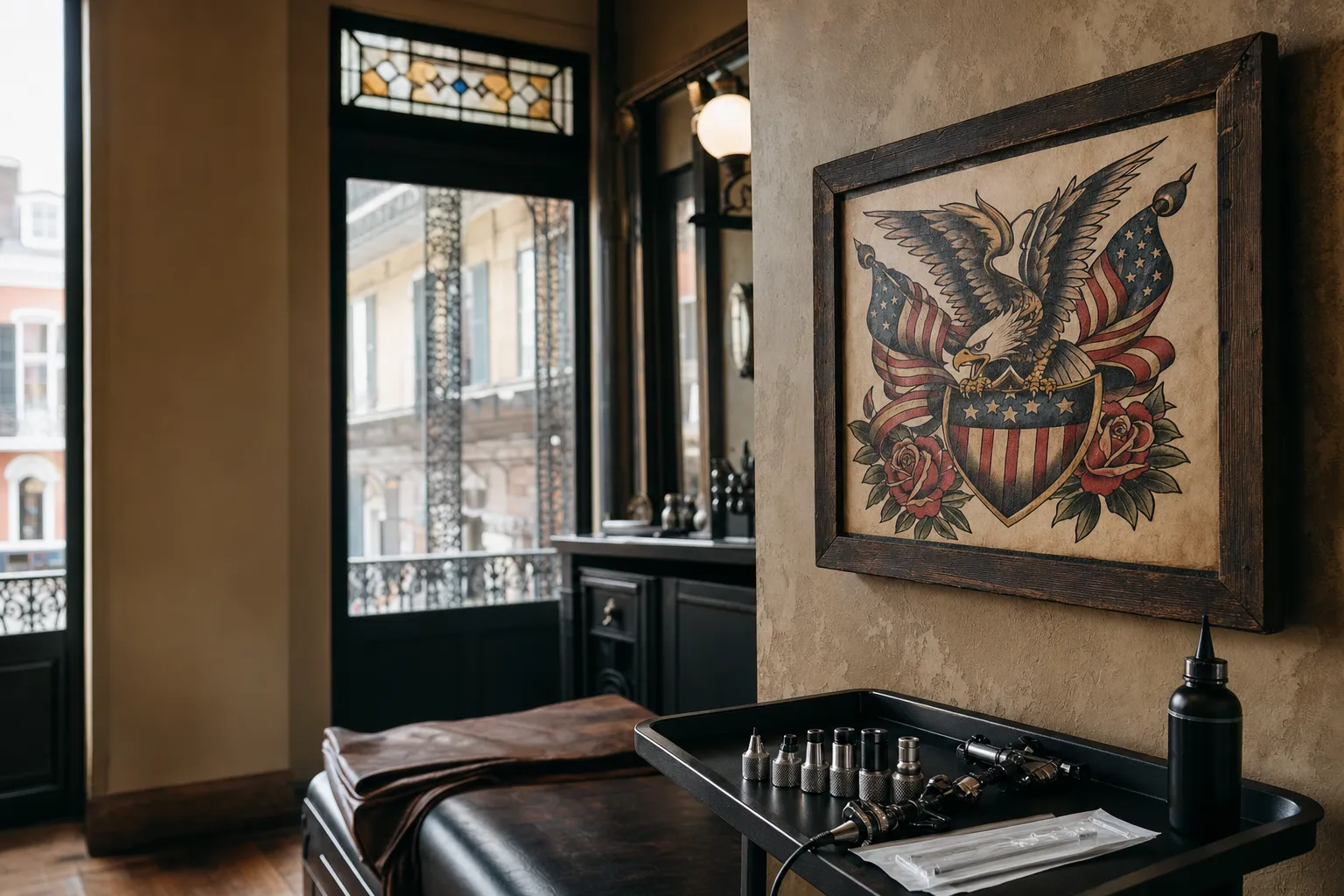
Start simple: when you visit Salon De Tatouage for a sleeve tattoo in Central City Louisiana, we recommend beginning with a focused discussion about theme, placement, and healing, and trying a partial sleeve or staged approach before committing to a full sleeve. That approach helps you test how a sleeve looks, heals, and fits your life while we refine the overall design.
What is a sleeve tattoo and why start small
A sleeve is a group of tattoos that cover a large area of the arm or leg and are designed to read as a single composition. Sleeves come in many styles, from full color American traditional to fine line black and grey. For first time visitors a partial sleeve or staged sleeve offers the chance to evaluate style, skin response, and daily comfort before completing the entire arm.
At Salon De Tatouage we focus on custom sleeves that reflect New Orleans character and individual taste. Our artists work in fine line, black and grey, traditional and photo real styles depending on the design intent.
Why this matters for visitors in Central City and New Orleans
Local factors affect sleeve planning. New Orleans humidity and sun exposure influence how color and detail age. Streetwear and social events in the French Quarter or Bourbon Street can make placement and visible healing a consideration. We factor in local lifestyle when planning a sleeve so the design and aftercare suit your time here and back home.
If you want to learn about our neighborhood presence, see our New Orleans location page for studio info and directions.
Key concepts to understand before you start
- Partial versus full sleeve. A partial sleeve covers part of the limb, a full sleeve runs from shoulder to wrist. Starting partial lets you test scale and healing.
- Staged sessions. Large sleeves are completed over multiple sessions. Each session focuses on a logical segment of the composition to preserve skin health and detail.
- Placement matters. Inner arm skin, outer arm, and forearm react differently to needles and sun. Placement affects pain, visibility, and how often you need touch ups.
- Style and cohesion. Fine line, black and grey, photo realistic and traditional approaches require different ink choices and needle work. Cohesive themes tie a sleeve together across sessions.
- Healing and maintenance. Sleeves take longer to heal and have different aftercare needs than single small tattoos. Proper care preserves detail and color.
How we guide first time visitors at Salon De Tatouage
We meet you as collaborators. Our process for first time visitors typically includes a design conversation, placement mock ups, and a staged plan for sessions. For visitors who want to try sleeve work while visiting New Orleans we recommend a focused first session that establishes tone and key elements, leaving additional sessions for follow up visits or local scheduling.
What to expect from a first session
- Design review. We refine your idea into a clear composition that suits your arm and lifestyle.
- Stenciling and sizing. Mock ups placed on the arm so you can see scale and flow.
- First pass work. Outlining or initial shading for continuity rather than finishing the entire sleeve in one visit.
- Aftercare instructions. A clear plan for healing at home and when to return for the next stage.
Partial sleeve, three quarter sleeve, or full sleeve comparison
| Type | Typical session plan | When to choose it |
|---|---|---|
| Partial sleeve | 1 to 3 sessions | Try a proved theme, keep some natural skin or existing tattoos visible |
| Three quarter sleeve | 3 to 6 sessions | Balance between impact and time commitment, good for staged travel sessions |
| Full sleeve | 6 or more sessions | When you want an entirely unified arm length composition and can plan staged sessions |
Checklist for first time visitors planning a sleeve
Before you arrive
- Collect reference images and note preferred styles, including any New Orleans motifs you want included.
- Decide which arm and general placement you prefer, and whether you want a staged approach.
- Review basic aftercare recommendations so you can plan healing time during travel.
At your first appointment
- Talk openly about pain tolerance, schedule, and any previous tattoos.
- Ask to see portfolios of sleeve work in styles you like, including fine line and black and grey.
- Confirm the staged plan and approximate timing for follow up sessions.
Pro tip: If you are visiting for a weekend start with a session that sets the theme and scale, such as an outline or focal piece. That gives you a realistic sense of how the sleeve will look and heal before you commit to more sessions.
Common questions from first time sleeve clients
Will a sleeve hurt more than a small tattoo
Pain varies by location and by person. Sleeves include a range of areas, some more sensitive than others. We plan sessions so you can stop or slow at any time. Many clients choose shorter sessions across multiple visits to manage discomfort.
How long does a sleeve take to heal
Individual sessions usually heal in two to three weeks. A full sleeve may take months to complete and a few months for all healing and settling. During that time you should protect ink from sun and use recommended moisturizers to preserve detail and color.
Can I get a sleeve while visiting the French Quarter
Yes. We welcome visitors and walk ins. For larger sleeves we recommend starting with a planned session that fits your trip, then scheduling follow up sessions either here in New Orleans or with a trusted artist near you.
Related services and ways we support sleeve work
We offer services that commonly pair with sleeve projects: custom tattoos to create the core compositions, fine line tattoos for delicate elements, and photo realistic pieces when clients want portraiture as focal points. See our sleeve tattoos service page to explore how we structure sleeve appointments and sessions.
For preparation and healing guidance, our topics on pre tattoo skin care and tattoo aftercare provide detailed timelines and product suggestions.
Related locations to consider when planning a visit
Salon De Tatouage is based in New Orleans and welcomes guests from the French Quarter, Marigny, Vieux Carrée and beyond. If you are exploring neighborhood options and travel plans, check our New Orleans location page for studio details and nearby landmarks that help coordinate your visit.
Helpful resources and reputable references
When we discuss health, regulations and industry context we look to authoritative sources. The U.S. Bureau of Labor Statistics provides occupational information about tattoo artists and piercers that helps explain typical session schedules and studio staffing. For infection prevention and safe body art practices we reference guidance from the Centers for Disease Control and Prevention. For product specific aftercare advice, manufacturer instructions are the primary source for healing recommendations.
Specific references we consult include the Bureau of Labor Statistics occupational profile for tattoo artists and piercers and the CDC guidance on safe body art practices.
Key signs a sleeve is healing well and when to revisit an artist
- Normal signs: scabbing that flakes off, mild itching, and fading redness around the tattooed area during early healing.
- Good progress after two weeks: edges smooth, most scabs gone, colors and lines starting to settle.
- See an artist for touch ups if you notice persistent raised bumps, spreading redness, heavy discharge, or if lines blur after full healing.
Key takeaway
For first time visitors thinking about a sleeve, start with a staged approach. A partial sleeve or an initial session that sets theme and scale lets you test style, healing and placement while you experience New Orleans. We will help plan sessions, recommend aftercare, and align the design with your life and travel plans.
Frequently asked questions
How do I choose between a partial sleeve and a full sleeve
Consider your time available for sessions, pain tolerance, and how visible you want the tattoo to be. Partial sleeves let you test a style and heal a smaller area first. Full sleeves deliver a unified look but require more sessions and planning.
How long should I wait between sleeve sessions
We typically space sessions several weeks apart so the skin can recover. Exact timing depends on the size of the previous session and how your skin responds. We assess healing during follow ups and recommend the next session when the area is ready.
Can I travel after a sleeve session
Short trips are usually fine after small to medium sessions if you follow aftercare. If you are traveling by air after a large session, plan for extra recovery time and follow specific aftercare steps to avoid irritation from luggage or sun exposure.
Do you create sleeves with New Orleans themes
Yes. Our artists collaborate with you to include local motifs that reflect New Orleans character, whether subtle or central to the composition.
Learn more and check our local profile
Check Salon De Tatouage on Google Business Profile to read recent reviews and get directions. To explore related reading on this site see our page on sleeve maintenance, our sleeve tattoos service page, and our New Orleans location page for studio details and neighborhood context.
Sleeve maintenance, Sleeve Tattoos service page, New Orleans location page