
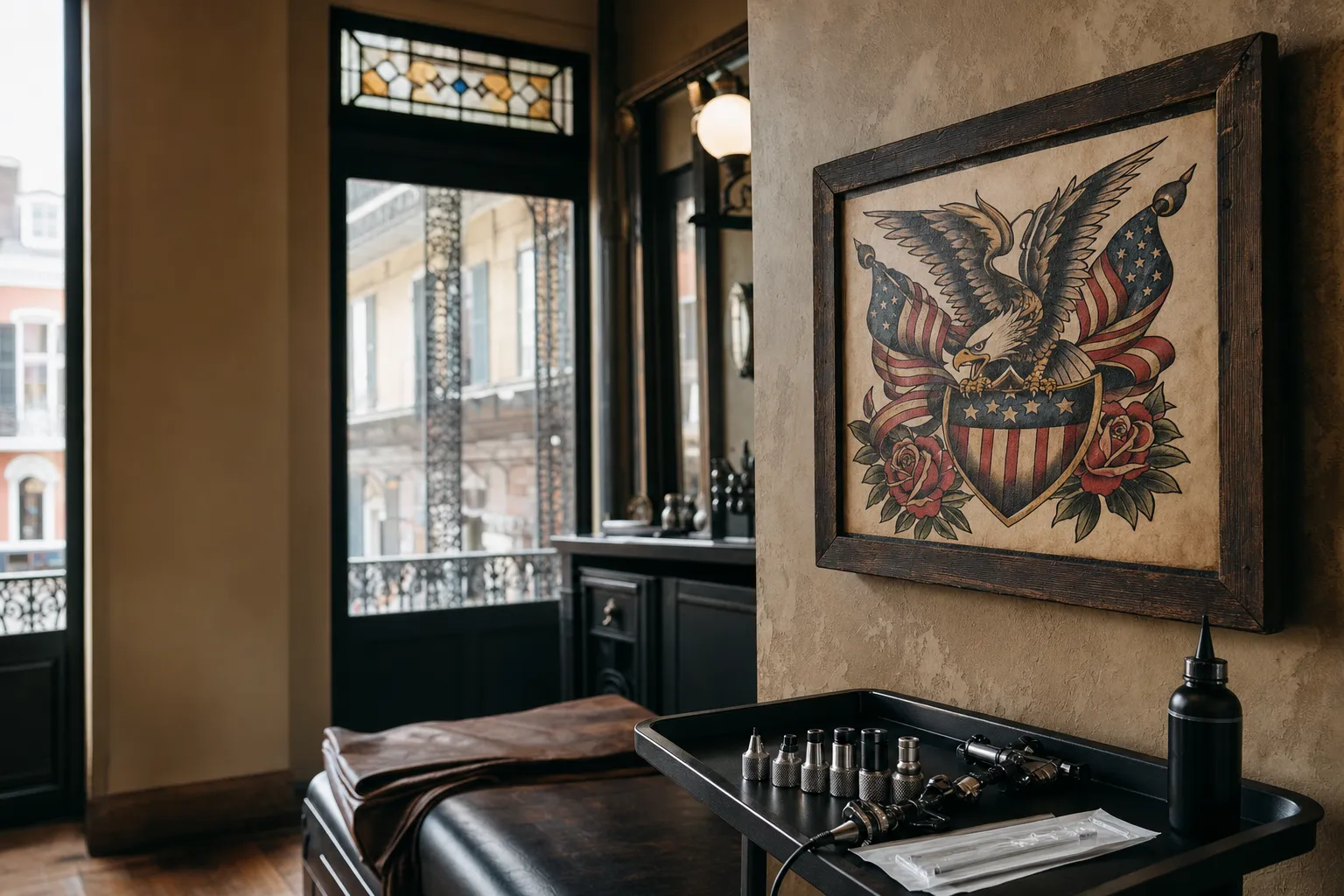
Reading a tattoo portfolio means looking beyond single images to judge line work, consistency, healed results, and how a series of pieces reads together as a sleeve. If you are near Marrero, Louisiana, our team at Salon De Tatouage in New Orleans looks at portfolios this way to translate portfolio inspiration into a sleeve that fits your body and style.
What is a reading portfolio and why it matters for sleeve tattoos
A reading portfolio is a curated selection of an artist or studio work meant to show skills, preferred subjects, and how pieces look on skin over time. For sleeve tattoos, a portfolio does more than show a single design. It shows composition, flow, and how motifs balance across the arm.
For people based in Marrero and nearby communities, a good portfolio helps you pick the right artist without traveling far. At Salon De Tatouage we use portfolios to match your idea to an artist who knows fine line, black and grey, American traditional, or full sleeve composition.
Key concepts to understand when you read portfolios
- Consistency. Look for similar quality across many pieces, not just one standout image.
- Line quality. Clean, confident lines are easier to maintain as a sleeve heals.
- Shading and contrast. Good contrast keeps a sleeve readable at a distance.
- Placement photos. See images of work on the arm, rotated and from different distances.
- Healed examples. Healed photos show how pigment settles and whether touch ups are common.
- Subject variety. Portfolios should show a range that matches your style, from fine line detail to bold traditional blocks.
How we use reading portfolios to plan sleeve tattoos
When a client from Marrero brings portfolio ideas, we follow a practical process so the sleeve reads well and lasts. We do not hand you a recipe to do this yourself. Our artists combine design skill and placement judgment to make the final work fit your arm and lifestyle.
- Talk and translate. We ask what you like about each portfolio image, then translate those features into a balanced sleeve concept.
- Map the arm. We plan where large elements sit and how filler and negative space work.
- Mock up the flow. We draw compositions that show how motifs connect from shoulder to wrist.
- Refine details. We select the right line weight, shading approach, and color palette for long term readability.
Pro tip: When you save portfolio images, include a short note about what you like, for example composition, subject, or line work. That helps an artist quickly see your priorities.
Reading portfolio ideas and inspirations for sleeve themes
Below are common themes clients bring from Marrero and greater New Orleans, and what to look for in portfolios when you are considering each.
- New Orleans inspired sleeve. Look for local motifs, fleur de lis, architecture, and musicians rendered in a consistent style so the sleeve feels cohesive.
- Black and grey portrait sleeve. Choose portfolios with multiple healed portraits and close ups that show skin tone transitions and eye detail.
- Fine line botanical sleeve. Seek examples with consistent line weight and negative space that keeps the sleeve breathable.
- Traditional story sleeve. Portfolios should show bold blacks, solid color fills, and clear outlines that age predictably.
- Photo realistic sleeve accents. For portrait or photo realism elements, prioritize healed photos and pieces that integrate realism into larger compositions.
Checklist for evaluating a tattoo portfolio
Before you book, check for
- Multiple photos of the same piece, including close ups and arm placement views.
- Healed images that show how the ink settled after a few months.
- Consistent line work and shading across many pieces.
- Examples of work done on the same skin tone as yours, when possible.
- Evidence the artist can design for sleeves, not just single patch tattoos.
Comparing sleeve styles at a glance
| Style | Look | Good for |
|---|---|---|
| Fine line sleeve | Delicate lines, light shading, lots of negative space | Clients who want subtle, detailed work and small motifs that stack |
| Black and grey sleeve | Depth created with shading and contrast, often portrait or realistic elements | Portraits, memorial pieces, moody compositions |
| Traditional sleeve | Bold outlines, solid color fills, clear readable motifs | Clients who want longevity and graphic readability |
Many clients from Marrero prefer to visit us in the French Quarter to review portfolios in person. Seeing printed books and healed examples under natural light helps you judge texture and contrast.
Common questions we answer when you bring portfolio ideas
- Can I mix styles in one sleeve? Yes, but it takes careful composition so the sleeve reads as one piece rather than a patchwork.
- How many sessions will a sleeve need? That depends on size, detail, and color. We plan realistic session counts after a layout and consultation.
- Should I bring reference images or a portfolio page? Bring both. Reference images show motifs you like, and portfolio pages show an artist capability and healed results.
- What questions should I ask an artist about their portfolio? Ask to see healed photos, work on similar placements, and examples of sleeves or connected pieces.
Related services and pages to help you prepare
To explore how portfolio choices connect to actual services, see our page on sleeve tattoos for details about planning sessions and placement. If you are looking for custom work based on portfolio ideas, our custom tattoos page explains how artists collaborate on original designs. For more examples and topic guidance, our Reading Portfolios topic page collects portfolio tips and examples.
Where to view portfolios in person near Marrero
We are based in New Orleans and welcome visitors who want to flip through physical portfolio books. Seeing work in person gives you a better sense of scale, line quality, and how pieces sit on the arm. If you are planning a visit from Marrero, consider looking at portfolios that show sleeves and healed work, then discuss your ideas with an artist.
For information about our studio locations and hours, see our locations page. We serve both locals and visitors to the French Quarter and the greater New Orleans area.
Key takeaway
Read portfolios for consistency, healed results, and examples of sleeve flow. Use portfolios as a starting point, and rely on an artist to adapt those ideas into a sleeve that fits your arm and your style.
Frequently asked questions
What exactly should I look for in healed photos?
Look for even pigment, minimal blowout, and how shading holds together at different distances. Healed photos show whether details remained crisp and whether any areas faded unevenly.
Can I bring images from social media?
Yes. Bring clear reference images and note what attracts you to each one. We will discuss how those features translate into a sleeve that works with your anatomy and skin type.
How do portfolios influence price and session count?
Portfolios help set expectations for complexity and detail. More intricate, photo realistic, or highly detailed fine line sleeves generally require more time and sessions than simpler traditional work. We review scope and timing before scheduling.
Are portfolios the same as a portfolio book or online gallery?
Both are useful. Physical portfolio books show texture and scale, while online galleries let you save images. We recommend seeing at least one in person when planning a sleeve.
Learn more and find our portfolios
Browse our Reading Portfolios topic page to see examples and tips on portfolio selection. To review our approach to sleeves, read our sleeve tattoos service page, and check our locations page for studio details and directions. For real time opinions and recent guest photos, view our Google Business Profile and read visitor reviews for an outside perspective.