
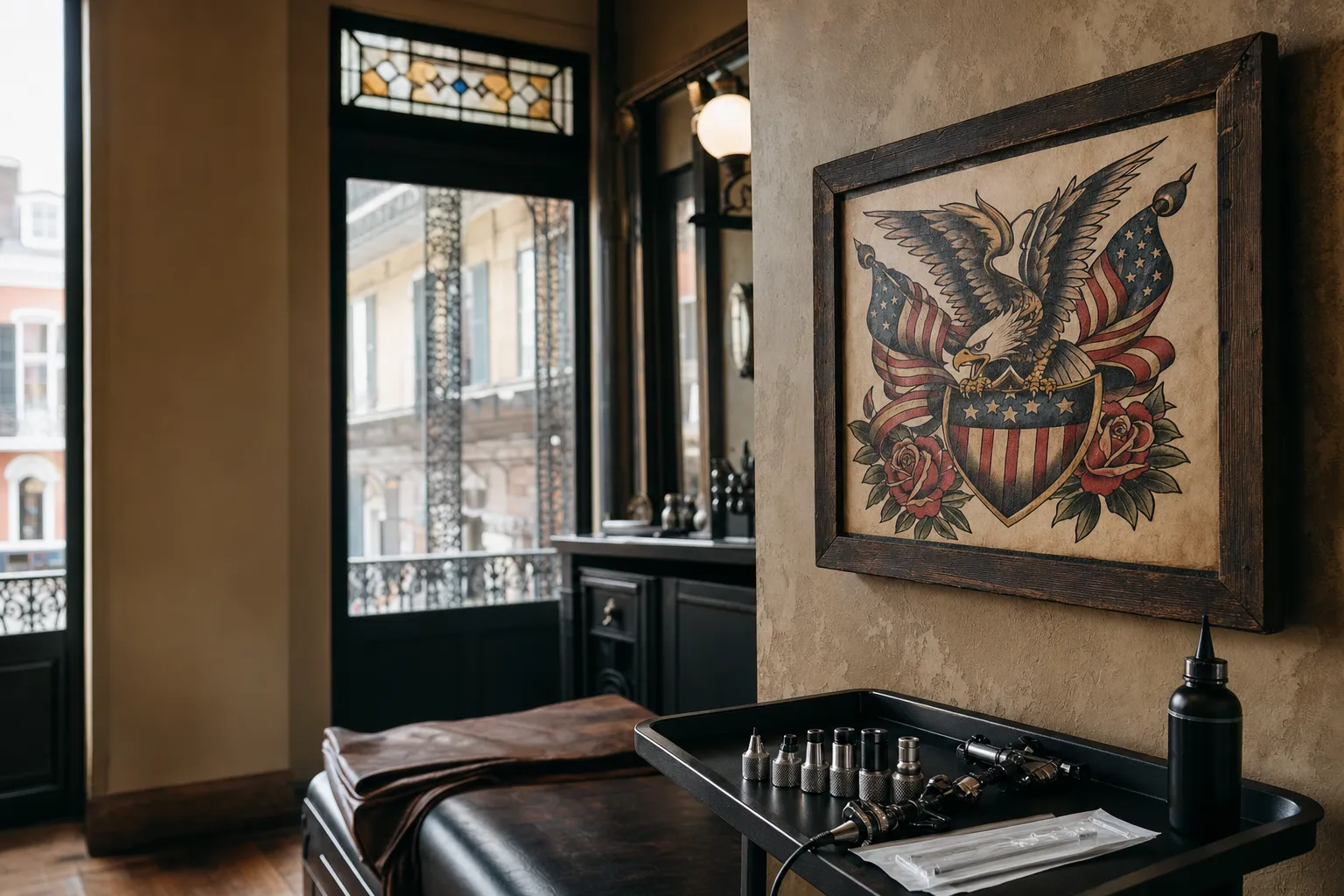
Reading portfolios is the process we use to evaluate an artist's body of work so you can judge their skill, consistency and whether their style fits your idea. In short, look for consistent line quality, clear healed photos, a range of placements, and examples similar to the tattoo you want. We walk you through what those things mean for tattoos in Storyville.
What reading portfolios means for your tattoo
When we say reading a portfolio we mean more than scanning pretty pictures. A good read looks at technical skill, healed results, composition, and whether an artist has experience with the placement and style you want. We focus on practical clues that predict a good outcome, not trends or social media likes.
Here are the core signals we check in any portfolio.
- Line work and consistency, especially for fine line tattoos and hand tattoos.
- Shading transitions and tonal control for black and grey and photo realistic pieces.
- Evidence of healed work, not only fresh immediately after the tattoo.
- Variation in placement, so you can see how the design sits on different body shapes and locations.
- Custom work examples that show concept development from sketch to finished piece.
Why reading portfolios matters in Storyville and the French Quarter
We serve locals and visitors to the French Quarter and Storyville, and many clients arrive with limited time. Reading portfolios well helps you pick an artist rapidly and with confidence. In a neighborhood with busy foot traffic and souvenir style requests, portfolio reading separates quick, well executed tattoos from pieces that may not age well or suit the placement.
For visitors from Bourbon Street or travelers stopping in from other neighborhoods, a portfolio can tell you whether an artist understands New Orleans inspired motifs and the local approach to fine line, American traditional and black and grey work.
Key concepts to evaluate in a portfolio
- Fresh versus healed photos. Fresh photos show color and swelling. Healed photos tell you how the line work and shading settled.
- Consistency across pieces. Look for steady lines and repeated success in similar styles, not just one standout image.
- Placement examples. Good portfolios include tattoos on hands, forearms, ribs and other tricky areas so you can see how designs conform to curvature.
- Size and detail balance. Artists who show both small fine line work and larger sleeve pieces understand scale and density.
- Custom process. Portfolios that include sketches or design notes indicate collaborative custom work ability, useful for commissions and New Orleans themed pieces.
Checklist for reading a tattoo portfolio
Portfolio review checklist
- Are there healed photos for the style you want?
- Do multiple examples show the same level of line control or shading?
- Are placements similar to where you want your tattoo?
- Does the artist show work on a range of skin tones and body shapes?
- Is custom work documented from sketch to finished piece?
- Do captions or notes explain shop aftercare or touch up history?
Common questions and what to ask
We encourage clients to ask specific questions when reviewing portfolios. Below are the most useful ones, and why they matter.
- Can you show healed photos of this style? Healing reveals whether lines spread or tones remained crisp.
- How long ago was this piece done? Older photos show long term stability better than recent work.
- Have you tattooed this body area often? Some artists excel on flat areas but avoid hands or fingers.
- Is this custom or flash work? Custom work requires more collaboration and different sizing choices.
Pro tip: If a portfolio lacks healed photos, ask the artist for follow up images or references. Healed results are the clearest indicator of long term quality.
What good looks like for different styles
Different styles require different portfolio signals. We summarize what to expect so you can judge an artist quickly.
- Fine line tattoos. Look for razor steady single pass lines, even spacing, and healed close ups that show minimal blowout.
- Photo realistic tattoos. Seek tonal range, smooth gradients and photos that compare the reference to the finished piece.
- American traditional. Expect bold outlines and solid fills with consistent saturation across multiple examples.
- Hand tattoos. Hand pieces age differently. Portfolios should include healed hand shots and examples of touch ups when applicable.
Related services and how portfolios inform them
Reading portfolios helps you choose the right service. For example, if you want a bespoke design you will want to review custom work portfolios and sketches. For small fine line tattoos, prioritize healed close ups.
See examples in our custom work at Custom Tattoos and hand tattoo examples at Hand Tattoos. For the full range of services we offer, visit our tattoo shop page at Tattoo Shop.
How reading portfolios fits into choosing time and place
Some placements, like hands and fingers, need artists who show repeated success in those spots. If you are visiting Storyville or the French Quarter briefly, focus on portfolios that show quick sessions with consistent outcomes, and communicate your timeline to the artist so they select a design that fits the appointment window.
We welcome walk ins and appointments from visitors who have reviewed portfolios online and want to match to one of our artists. When you are looking at examples from any New Orleans shop, compare the portfolio to how the design will sit on your body and whether the artist shows healed work in similar locations.
Related locations and local context
Portfolio reading matters across New Orleans neighborhoods. In Storyville and the Vieux Carré, designs often nod to local culture. Seeing those references executed well helps you pick an artist who understands the local aesthetic.
Explore portfolios that reference the French Quarter and Storyville by starting with our Storyville location page at Storyville, Louisiana.
Helpful resources and studies
For background on tattooing as a craft and workforce context, industry sources and reference pages give useful perspective. For example, a general overview of tattooing is available on Wikipedia, and workforce data for personal care professions can be found on the United States Bureau of Labor Statistics site. Manufacturer care instructions for pigments and aftercare products provide specifics on ink behavior and healing.
When a portfolio references healed work, comparing that with manufacturer aftercare or BLS occupational context helps set realistic expectations about touch ups and aging.
Common portfolio red flags and how we handle them
There are a few consistent warnings we watch for when we read portfolios.
- Many only fresh photos and no healed examples, which makes outcome hard to predict.
- Inconsistent line weight across similar pieces, suggesting variable technique.
- Only the same single subject repeated, indicating limited experience with different placements or sizes.
If we see these issues in a visiting artist portfolio, we bring it up honestly with the client and show alternatives from our team that better match the request.
How we present portfolios at Salon De Tatouage
We curate portfolios to show healed results, the sketch to finished progression for custom work, and examples across styles we offer, from fine line and hand tattoos to sleeve and photo realistic work. Our artists label photos with placement and approximate age of the tattoo so you can assess stability.
That transparency is part of how we work. We do not list prices in portfolios, and we encourage you to discuss placement and touch up plans in person.
Key takeaway
When reading tattoo portfolios, prioritize healed photos, consistent technique, placement examples and evidence of custom design work. Those signals are the most reliable predictors of a successful tattoo, whether you are a local or visiting Storyville for a short trip.
Frequently asked questions
What counts as a healed photo and why is it important?
A healed photo shows the tattoo after the skin has fully recovered, typically several weeks to months later. Healed images reveal how lines settle and whether shading kept its tonal range. We ask artists for healed photos when possible because they tell more about long term appearance than fresh images.
Can I rely on social media portfolios?
Social media is useful but can be selective. Look for posts that include before and after or healed shots, and check whether the artist captions placement and time since application. For a closer read, ask the artist for additional healed images that may not be posted publicly.
How do portfolios differ for hands and fingers?
Hand and finger tattoos age differently due to frequent washing and sun exposure. Portfolios for those areas should include multiple healed hand pieces and note any known touch up history. We review those examples carefully before recommending a style.
Should I compare multiple artists portfolios?
Yes. Comparing portfolios helps you see which artist consistently delivers the style you want. Pay attention to healed results and placement experience rather than follower counts or single standout pieces.
Where to look next
Check our Reading Portfolios guide for more examples and notes on how our artists document healed work at Reading Portfolios. If you are visiting Storyville, review the Storyville location page to see what to expect when you come by and read recent customer reviews on our Google Business Profile to learn about guest experiences. You can also explore related services like Custom Tattoos and Hand Tattoos for style specific examples.
Salon De Tatouage serves guests from the French Quarter, Storyville and greater New Orleans who want thoughtful, well executed ink.