
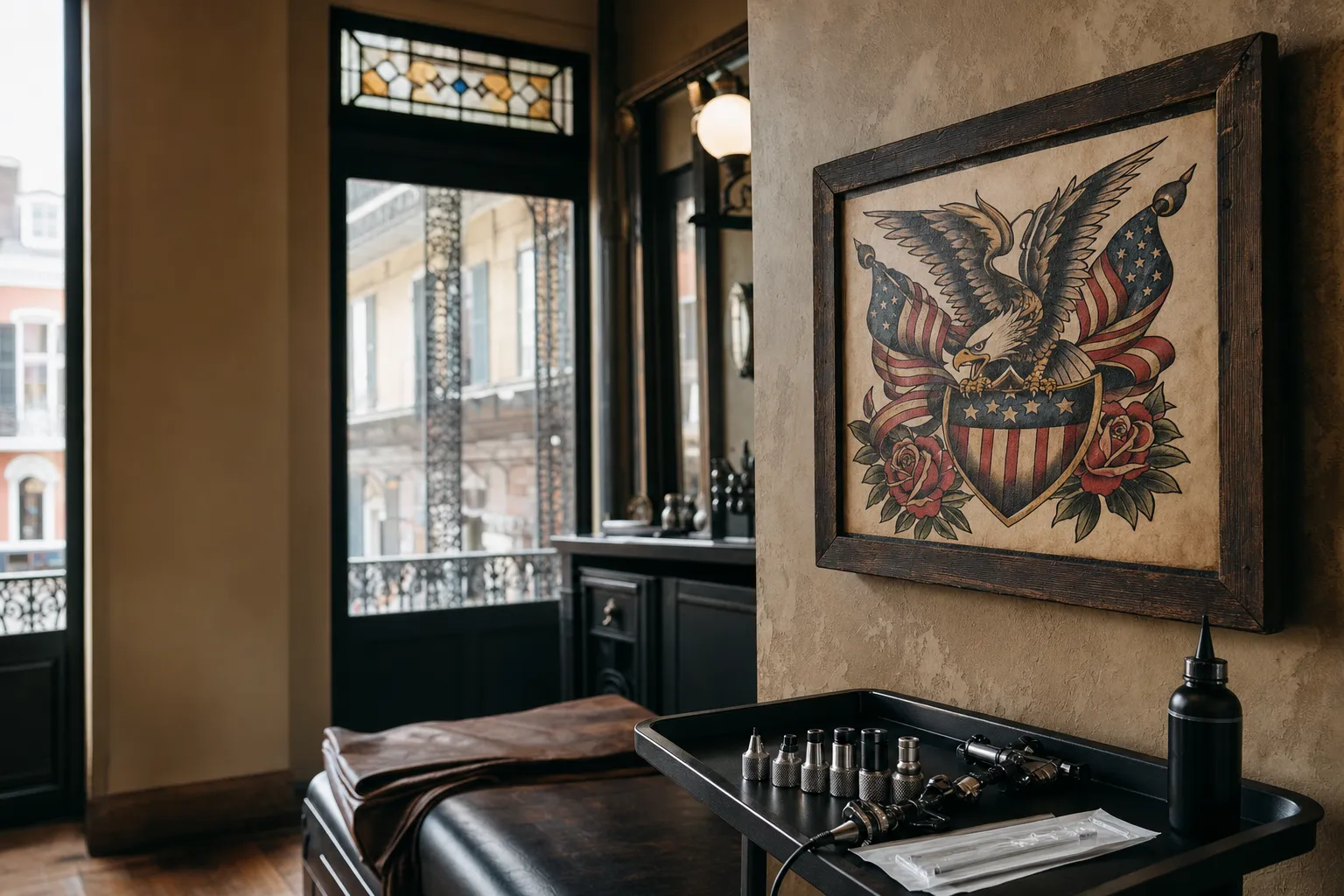
The main tattoo removal options are laser removal, surgical excision, dermabrasion, chemical removal, and cosmetic cover up or lightening before a new tattoo. For most people in Metairie and the New Orleans area, laser removal is the most common and the safest option when performed by a licensed provider, though several factors determine how many sessions you will need and how complete the fading will be.
Quick summary
Laser removal uses focused light to break ink into smaller particles your immune system can clear. It works best on darker inks and older tattoos but requires multiple sessions spaced weeks apart. Surgical removal takes the tattoo out in one procedure but is limited by size and has a scar. Dermabrasion and chemical methods are less common today because they carry higher risk of scarring and uneven results. In many cases a lightening series plus a cover up or a fresh custom tattoo is the practical alternative to full removal. We help clients from Metairie and the greater New Orleans area evaluate these choices and plan next steps.
How the main removal options compare
Laser removal
Laser removal is the method most frequently recommended. A laser delivers short pulses of light that fragment tattoo ink. The body removes those fragments over time. Modern devices include Q switched and picosecond lasers. Results depend on ink color, depth, age of the tattoo, the artist work, and skin tone. Multiple sessions are typically required, often spaced six to twelve weeks apart to allow the body to clear ink and for skin to recover.
When people in Metairie ask about lasers, we explain that black and dark blue inks respond best, while green, teal, and certain pigments can be stubborn. White and fluorescent inks are the hardest to remove. Sun exposure, smoking, and the tattoo location on the body also affect clearance.
For general background on the science and history of laser removal, see the Wikipedia entry on tattoo removal, which summarizes techniques and device types.
Surgical excision
Surgical excision removes the tattooed skin and closes the wound. It can remove a tattoo in a single procedure, but it is practical only for small tattoos or when a larger scar is an acceptable tradeoff. Excision is typically done by a surgeon and may require referral to a medical clinic.
Dermabrasion and chemical methods
Dermabrasion mechanically abrades the skin to remove ink in the mid to deep layers. Chemical removal uses caustic agents to burn away layers of skin. Both approaches can be effective in some cases, but they carry higher rates of scarring, pigment changes, and uneven texture than modern lasers. They are less commonly used by reputable providers today.
Lightening for cover up or rework
For many clients, lightening the existing tattoo enough to allow a new design is the preferred path. This can be accomplished with focused laser sessions or with targeted tattoo touch up techniques. A skilled artist can plan a cover up that works without full removal. At Salon De Tatouage we routinely discuss cover up and rework options alongside removal, because cover ups preserve the skin and often reach the desired look faster.
Factors that determine results
Not every tattoo responds the same way. Expect a provider to evaluate these factors before recommending a plan.
- Ink color and pigment composition, with black fading most predictably.
- Ink depth and how densely the tattoo was packed.
- Age of the tattoo. Older ink often breaks down more easily.
- Skin tone and natural pigment, which affect the risk of lightening or darkening.
- Location on the body. Tattoos on hands and feet typically take longer to clear.
- Previous touch ups or layered work, which can add pigment complexity.
- Your immune response and overall health, which influence how quickly fragmented ink clears.
What to expect during a laser removal course
Providers take a phased approach. A typical course looks like the steps below. We do not perform laser removal at Salon De Tatouage, but we walk clients through options, help plan cover ups, and explain how to find a licensed laser provider in the New Orleans metro area.
- Consultation. The provider reviews the tattoo, asks about your medical history, and discusses realistic outcomes and risks.
- Test spot. Many clinics do a small test area to see how the skin responds.
- Treatment sessions. Each visit lasts minutes to an hour depending on size. Sessions are spaced to let the body clear ink and for skin healing.
- Healing and monitoring. You will get aftercare instructions to reduce infection and pigment changes, and the provider will chart progress between sessions.
- Assessment for cover up or further work. Once enough fading is achieved, you may choose a cover up tattoo or additional cosmetic work.
Watch out: Any provider who promises complete removal in one session, guarantees a specific number of sessions, or is vague about scarring and pigment risks should be treated with caution. Choose a licensed clinic and ask to see healed case photos for tattoos similar in color and size to yours.
Safety, regulation, and where to look for a provider near Metairie
Laser devices are medical class devices in many jurisdictions, and competency matters. In Louisiana, local public health guidance covers body art safety and facility sanitation. For the underlying regulatory considerations, consult the Louisiana Department of Health guidance on body art and related oversight. The U.S. Food and Drug Administration also provides information on the types of lasers used for tattoo removal and safety considerations.
When evaluating a clinic near Metairie, ask about licensing, who will operate the laser, what device they use, and whether they will provide a written consent that covers risks such as scarring, infection, pigment change, and allergic reaction. A reputable clinic will require a medical history and explain realistic expectations in writing.
How we help clients who want removal or a cover up
At Salon De Tatouage we focus on tattoos, not laser removal. When a client asks about removal we do three things. First, we explain what different removal methods mean for future tattoo options. Second, we plan cover ups that work around existing pigment and skin condition. Third, we help clients prepare questions to ask laser clinics or surgeons so they can choose a safe provider.
If you are considering working with us for a cover up or redesign after lightening, we review your healed photos, talk through size and placement changes, and show examples from our portfolio of fine line work, custom pieces, and black and grey tattoos. For clients traveling from Metairie, we explain healing timelines and how to coordinate sessions with an external removal provider.
Questions to ask a removal clinic
- What type of laser do you use and how many sessions do you estimate for my tattoo?
- Who will perform the treatment and what are their credentials?
- Can you show healed photos of similar tattoos you have treated?
- What are the risks for my skin tone and for the tattoo colors I have?
- What aftercare do you require and how should I manage sun exposure between sessions?
Pro tip: If you plan a cover up at Salon De Tatouage, bring clear, well lit photos of the healed tattoo, not pictures of it fresh after inking. Healed photos give a truer sense of remaining pigment and skin texture.
When removal is the right choice and when a cover up makes more sense
Removal is the right choice when the original tattoo has personal meaning you want erased, when it interferes with employment requirements that leave no alternative, or when a cover up cannot reasonably work because of placement or pigment complexity. A cover up or partial lightening is often the better choice when you want a new design and the existing tattoo can be incorporated or obscured with less risk, fewer medical procedures, and lower total time to a finished result.
We help clients decide by weighing the long term tradeoffs: number of medical visits, cost, scarring risk, the likelihood of full clearance, and how the skin will accept new ink. Those are practical choices best made with input from both a removal clinic and a tattoo artist experienced in cover ups.
Aftercare and healing considerations
Aftercare varies by method. Laser clinics typically provide a bandage and instructions about keeping the area clean, avoiding swimming and sun exposure, and watching for signs of infection. Surgical excision will have a different wound care plan and follow up for stitches. If you plan a cover up after lightening, allow the skin to fully heal and stabilize, which your laser provider and tattoo artist can time together.
For guidance on tattoo healing and follow up touch ups, our pages on tattoo aftercare and tattoo touch ups explain timelines and signs that a healed tattoo is ready for new ink.
Cost expectations and session timing
Costs vary widely by clinic, device, tattoo size, and number of sessions. Because prices change and vary locally, we do not list costs here. Instead, ask prospective removal clinics for an itemized estimate and an explanation of how many sessions they expect for tattoos similar to yours. For scheduling, plan months to a year or more for a typical multi session course, plus additional time if you plan a cover up with a tattoo artist.
Misconceptions and common questions
- Myth: Any tattoo can be completely removed in a single visit. Reality: Most tattoos require multiple sessions and some pigments never clear fully.
- Myth: Laser removal removes only black ink. Reality: Lasers are most effective on dark inks, but different wavelengths target different colors. Some colors remain difficult.
- Myth: Removal is painless or completely pain free. Reality: Treatments cause discomfort. Clinics use cooling and topical anesthetics in some cases, but sensations vary.
Pros
- Laser removal offers predictable, staged fading for many tattoos.
- Surgical excision removes small tattoos in one visit.
- Cover ups let you keep skin healthy and often reach the desired look faster.
Cons
- Multiple laser sessions can be time consuming and costly.
- Risk of scarring or pigment changes exists with any removal method.
- Some ink colors are resistant and may never fully disappear.
Key takeaway
Laser removal is the most common and generally safest path for tattoo fading in the Metairie and New Orleans area, but results depend on ink color, age, and skin. For many clients a lightening series plus a professional cover up provides the best balance of outcome, skin health, and time. We help clients evaluate options and plan cover ups when full removal is not practical.
Frequently asked questions
How many laser sessions will I need to remove my tattoo?
There is no single answer. Many tattoos need four to ten sessions, but some require fewer and others need more. Factors include ink color, tattoo age, depth of pigment, and your skin tone. A licensed laser provider will estimate sessions after an in person assessment or a clear healed photo.
Will tattoo removal leave a scar?
Any removal method carries some risk of scarring. Modern lasers aim to minimize skin damage, but pigment loss or scar formation can occur, especially with older methods like dermabrasion or chemical removal. Surgical excision will leave a surgical scar. Discuss scar risk and view healed case photos with the provider before starting treatment.
Can I get a cover up without removing the old tattoo?
Yes. Many tattoos can be covered by new art without full removal. Stylists consider color, contrast, and size when planning a cover up. At Salon De Tatouage we design cover ups and custom tattoos that incorporate or conceal existing ink when possible.
Are lasers safe for darker skin tones?
Lasers can work on darker skin tones, but the risk of pigment changes is higher. Clinics experienced with a range of skin tones, and devices with appropriate wavelengths, are better equipped to manage those risks. Always ask for examples of healed work on similar skin tones.
Do you perform tattoo removal at Salon De Tatouage?
We do not perform laser removal in our studio. Our artists advise on removal options, plan cover ups or redesigns, and help clients prepare to work with licensed removal clinics. We welcome clients from Metairie and the New Orleans region who want to discuss a cover up or fresh custom work after lightening.
Learn more and find local providers
Check our Google Business Profile for reviews and directions, and read more about tattoo removal on our site. For related reading, visit our topic page on Tattoo Removal Options, learn how we approach an in studio redesign on our Tattoo Shop page, or find out where we are located in New Orleans on our home page.