
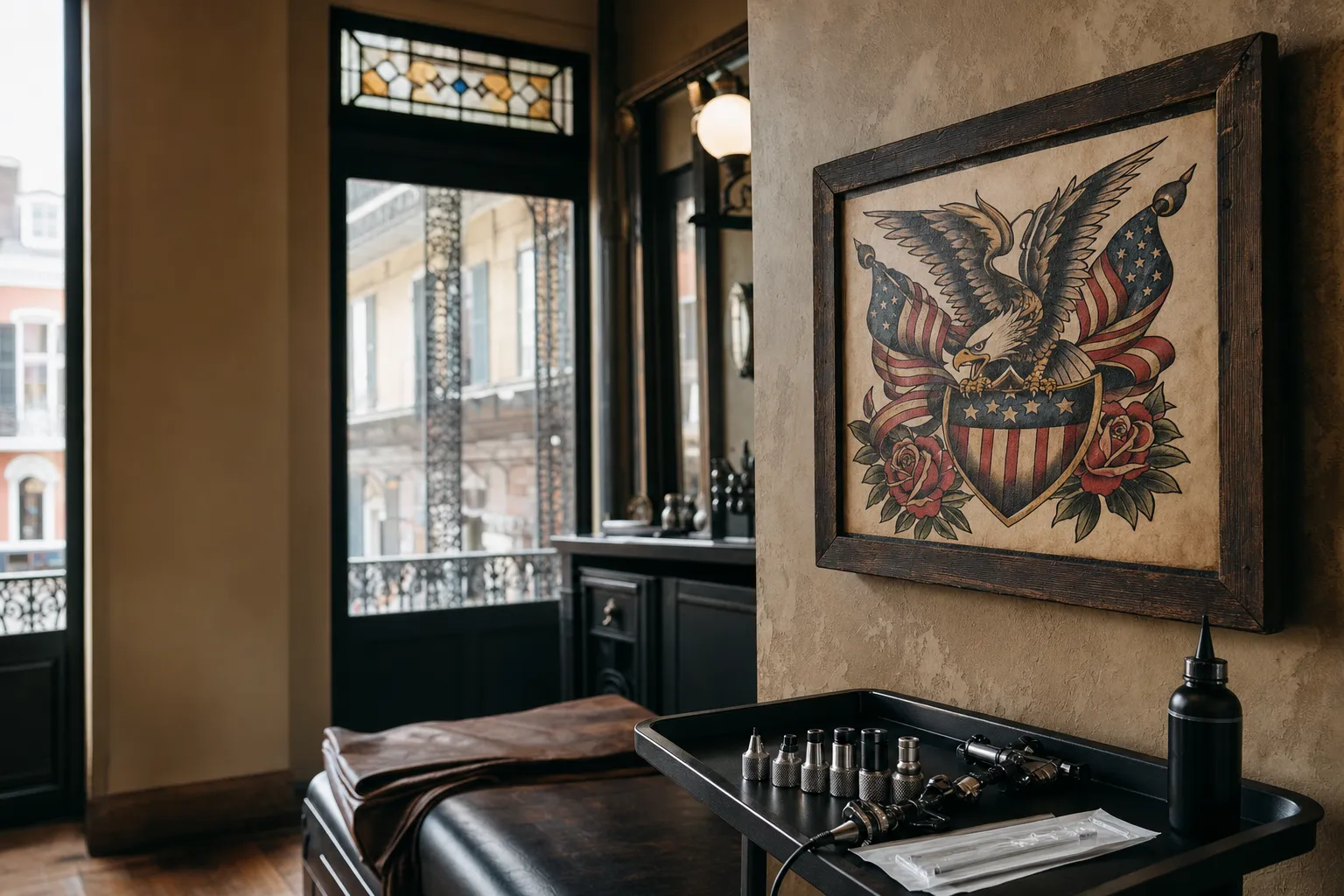
Pick a style that matches your personal taste, the spot on your body, and the artist you choose. At Salon De Tatouage we help people from Harvey and the greater New Orleans area choose a tattoo style that looks great now and still reads well years from now.
What choosing a tattoo style really means
Choosing a tattoo style is more than a label. It is deciding how the image will be drawn, how much detail it will include, and how the piece will age on your skin. Style covers line weight, shading, color use, level of realism, and the overall visual language the artist will use to interpret your idea.
We start every conversation with three practical questions: what do you want the tattoo to say, where will it go on your body, and how do you want it to age. Those answers narrow the style choices quickly.
Why your choice matters in Harvey and New Orleans
Local context shapes good choices. In Harvey and across New Orleans people often choose work that nods to city culture and Bourbon Street energy, or they prefer discreet fine line pieces that travel well between local life and tourist moments. Climate and daily life matter too, because humidity and sun exposure affect how color and fine detail hold up.
We also see two practical patterns from clients who live in Harvey but visit the French Quarter. Some want bold traditional tattoos that read clearly in crowds. Others want delicate, personal pieces that sit well under summer clothing. Knowing which direction you prefer makes it easier for us to match you with the right artist and technique.
Key concepts to understand when choosing style
- Line weight and detail. Fine line tattoos use thin hairlike strokes, while traditional work uses stronger outlines. Detail level affects how small a design can be and how it ages.
- Black and grey versus color. Black and grey lasts predictably and often requires less touch up. Color can be vibrant, but pigment and sun exposure affect longevity.
- Realism versus illustrative. Photo realistic tattoos aim for photographic likeness and need skilled shading and large surface area. Illustrative or traditional styles simplify forms so they read well at smaller sizes.
- Placement and skin texture. Hands, fingers, and high movement areas fade differently. We consider skin quality and sun exposure when advising style and placement.
- Artist specialization. Artists develop strengths like fine line, photo realism, or American traditional. The right match between client style and artist skill makes the biggest difference.
Practical steps to pick the right style
- Decide what you want to express. Is the tattoo a souvenir, a memorial, a fashion piece, or a statement? That helps determine whether to aim for subtlety or boldness.
- Choose placement first or size first. A tiny wrist symbol requires different treatment than a chest or sleeve design. Placement limits detail and palette choices.
- Gather reference images. Collect examples you like, not to copy, but to show the mood, line quality, and scale you prefer. Bring these to your consultation.
- Read artist portfolios. Look for consistent work in the style you want. Portfolios show how an artist handles edges, shading, and composition on real skin.
- Ask about longevity and maintenance. Some styles need earlier touch ups. We explain expected fading and care for each style in a consultation.
Compare common styles
| Style | When to choose it | What to expect |
|---|---|---|
| Fine line | Small, delicate personal pieces or text | Elegant, needs good skin and sun care, may blur over long time if too small |
| American traditional | Bold statement tattoos, good for visibility in crowds | Clear shapes, long lasting, limited color palette |
| Photo realistic | Portraits and images requiring high fidelity | Requires large area, highly skilled artist, detailed shading, more sessions |
| Custom illustrative | Personal stories and designs tied to local culture | Flexible, artist interprets composition, great for unique ideas |
Checklist Before you commit
Bring these to your consultation
- Reference images showing line weight, tone, or composition you like
- Clear idea of placement, with example clothing or photos of the area
- Any medical or skin concerns, including scarring or tattoos to be covered
- Questions about how the design will age and whether touch ups are likely
How our process helps you choose
We work from concept to finished design in stages so you can see how a style will look before your appointment. That process includes an initial conversation, a reference review, and an artist sketch that translates your idea into the chosen visual language. If you want a local flavor, we suggest elements that nod to New Orleans without making the design a cliché.
Our artists specialize in fine line work, custom tattoos, sleeve tattoos, photo realistic tattoos, and hand tattoos, so we match you with someone who has proven experience in the style you prefer. See our page about Tattoo Shop services to learn more about how we schedule and staff sessions.
How to read artist portfolios
Portfolios are the clearest signal of what an artist can do. Look for:
- Consistency in style across multiple tattoos, not just isolated strong pieces
- Work photographed on real skin, not only flat scans of flash
- Examples in the placement you want, for instance hands or sleeves
- Close ups that show line termination, shading transitions, and color blending
If you want help interpreting a portfolio, our article on reading portfolios breaks down what to look for and what questions to ask an artist.
Common misconceptions
- Misconception. Any artist can do any style well. Reality, artists train and focus. Choose someone whose portfolio matches your chosen style.
- Misconception. Smaller always means cheaper. Very small detailed work can take more time and skill, especially fine line or lettering.
- Misconception. Color always fades faster. Color stability depends on pigment quality, placement, sun exposure, and technique. We explain tradeoffs during the design phase.
Style choices by common occasions
We see these patterns among our guests from Harvey and New Orleans:
- Souvenir tattoos. Small, bold iconography that reads at a distance works well for festival or Bourbon Street visits. See our topics on Souvenir Tattoos for ideas.
- First tattoos. Many first timers prefer fine line or small illustrative pieces. Our First Tattoo Guide walks through what to expect.
- Sleeves and large work. Full sleeves favor cohesive illustrative or traditional approaches because they read well together and wear consistently.
Related services we provide
Some choices are service driven. For truly custom work we offer Custom Tattoos. If your leaning is toward refined, delicate lines, our Fine Line Tattoos specialists are a good match. We describe process and expectations on each service page so you can compare what we do for different styles.
How local rules and health standards affect style choices
Regulations and hygiene standards do not change style options, but they shape how studios operate and what to expect at a visit. For background on body art regulation in Louisiana, consult the state health guidance on body art operations. We also follow infection prevention practices recommended by professional organizations to protect clients during procedures.
We maintain a clean, all disposable studio practice and operate according to local health guidelines to keep your session safe and predictable.
Helpful resources and references
For more background on tattoo history and terminology see the Wikipedia entry on tattooing. For state specific rules consult the Louisiana Department of Health pages for body art. For professional standards and aftercare guidance see resources from industry associations such as the Alliance of Professional Tattooists.
Deciding between DIY flash and custom work
Flash or pre drawn designs can be a fast option if you want something simple and immediate. Custom work is better when you want a piece that fits a body area, tells a personal story, or requires specific line work. Custom designs usually involve a design stage with the artist, and sometimes multiple sessions for larger pieces like sleeves or photo realistic portraits.
Common questions people ask before choosing a style
- Will this style hold up on my hands or fingers? Hand and finger tattoos experience more wear. Bold simplified forms tend to last better than ultra fine detail in those locations.
- How do I know if an artist is right for photo realism? Look for multiple, consistent photo realistic pieces in their portfolio and photographs of healed pieces when possible.
- Does color hurt more than black and grey? Pain is more about placement and session length than pigment. We plan sessions to match your comfort and the demands of the style.
Pros and cons of popular styles
Pros
- Fine line, subtle and modern for small placements
- Traditional, durable and high visibility
- Photo realistic, emotionally immediate and striking when large enough
Cons
- Fine line can blur if too small or placed in high movement areas
- Color can fade with sun exposure and may need touch ups
- Photo realistic tattoos require larger areas and skilled artists
Pro tips from our artists
Pro tip: If you are unsure between two styles, bring examples of both and ask the artist to sketch a version of your idea in each approach. Seeing the same concept rendered two ways makes the choice obvious.
What we expect from clients and what you should expect from us
We ask clients to bring reference images, be honest about previous tattoos or skin issues, and think about long term goals for the piece. We will show portfolio examples, explain how a style will age on the chosen placement, and recommend the right artist from our team. We are licensed and insured and follow disposable studio practices to keep sessions safe.
Key takeaway
Your tattoo style should be a match between your idea, the placement, and the artist who will execute it. We help clients from Harvey and New Orleans make that match by reviewing portfolios, presenting design options, and explaining how different styles age and wear.
Frequently asked questions
How do I find the right artist for a specific style?
Look for consistent portfolio examples in that style, ask about healed photos, and request to see similar placements. We pair clients with artists who specialize in the required style to ensure the best outcome.
Can I change styles partway through a sleeve project?
Yes, but plan changes can affect cohesion. Talk to the artist early about transitions, color palettes, and how different styles will sit together so the sleeve reads as a single composition.
How does skin tone affect style and color choices?
Skin tone alters how pigments read. Some colors show better on lighter or darker skin, and contrast is key. Our artists advise on palette choices that preserve legibility and longevity on your skin.
Do fine line tattoos need special aftercare?
The basic aftercare is similar across styles, but fine line and small detail pieces benefit from careful sun protection and avoiding friction while they heal. See our resources on tattoo aftercare for full guidance.
Where to learn more and how to prepare
Read client reviews and get directions on our Google Business Profile, and explore related pages to prepare for your visit. For inspiration see our Design Inspiration page, and for location details check our Locations listing. To understand our service flow and offerings see our Tattoo Shop page.
We welcome visitors from Harvey and greater New Orleans who want thoughtful, well executed ink.