
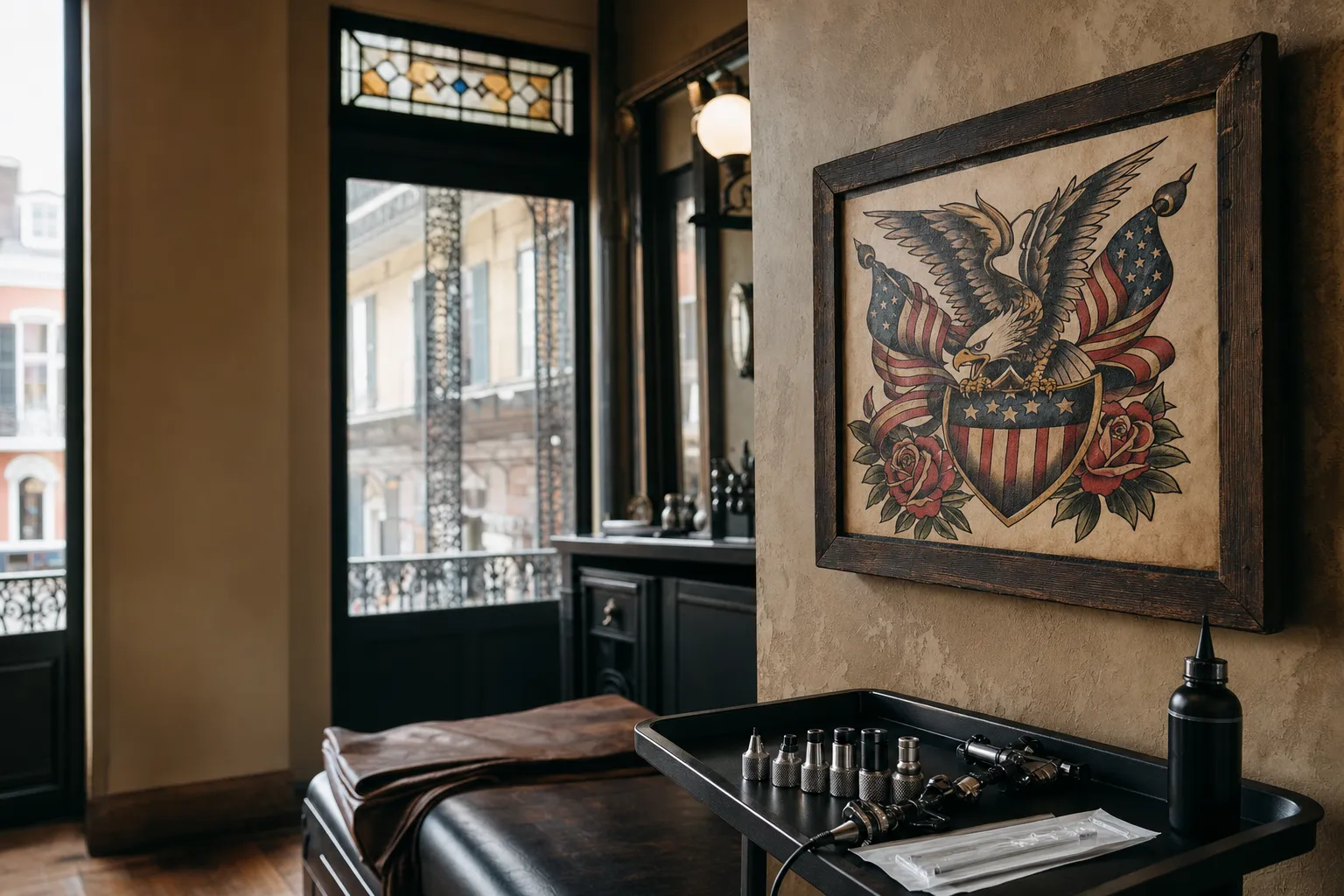
We keep fine line tattoos that use traditional symbols looking fresh by matching the symbol to the right line weight, placement, and ink saturation so the design reads clearly as it heals and ages.
What are traditional tattoo symbols
Traditional tattoo symbols are motifs that carry cultural meanings and a long visual history. Examples include anchors, swallows, roses, daggers, hearts, nautical stars, and religious icons. In American traditional work these symbols are bold and simplified. When we adapt those same ideas for fine line tattoos we keep the recognizable form while using thinner line work and subtle shading so the image reads at smaller sizes.
Why traditional symbols matter for fine line work in our area
Traditional symbols resonate with locals and visitors to New Orleans because they connect to sailors, music, faith, resilience, and the citys layered history. In the French Quarter and around Bourbon Street you will see tattoos that nod to those stories. For a fine line approach we consider not only aesthetics but also how skin type, sun exposure, and everyday wear in Westwego and greater New Orleans affect small details over time.
Key concepts we use when adapting traditional symbols to fine line tattoos
- Readability over tiny detail. We simplify busy motifs so lines do not blur together as the tattoo settles.
- Line weight and spacing. Slightly heavier single lines and intentional spacing prevent early blowout on thin designs.
- Placement matters. Areas with less friction keep detail longer, while hands, fingers, and sides of the foot need design changes to last.
- Ink saturation and contrast. Controlled black and grey work keeps a symbol recognizable without overwhelming the fine line look.
- Skin tone and texture. We choose pigments and contrast to suit different skin tones so symbols remain readable.
How we translate common traditional symbols for fine line tattoos
Below are examples of how a classic symbol is adjusted for fine line work and what to expect from each choice.
| Symbol | Classic trait | Fine line adaptation | Best placement |
|---|---|---|---|
| Anchor | Bold outline, solid fills | Single precise lines, minimal fill, subtle shadow | Forearm, chest |
| Swallow | Strong silhouette | Delicate contour, separated feathers for clarity | Calf, shoulder |
| Rose | Thick petals and leaves | Open petal lines, fine dot shading for volume | Upper arm, ribcage |
Checklist for choosing a traditional symbol as a fine line tattoo
Before you book
- Choose a symbol that still reads when simplified.
- Pick a placement with lower friction for fine details.
- Discuss skin tone and texture with your artist.
- Ask to see portfolios of fine line versions of similar symbols.
Common questions clients ask about traditional symbols and fine line tattoos
We answer the typical concerns up front so you know what to expect during design, the session, and the months after.
Will a traditional symbol lose meaning if I make it fine line
The meaning usually stays intact. We focus on keeping the core silhouette or iconography intact while simplifying secondary elements so the symbol remains identifiable at a small scale.
How small can a traditional symbol be and still look good as fine line
Size depends on the symbol. Simple shapes like stars or anchors can work small. Complex scenes need larger canvases to preserve detail. We guide that choice based on the specific symbol and placement.
Related services we provide
We combine fine line skill with other specialities depending on the project. For example we may incorporate American traditional elements into a custom fine line piece or expand a symbol into a sleeve where scale helps maintain detail. Learn more about the service we use for these projects on our fine line tattoos page and our custom tattoos page.
How local climate and lifestyle affect symbol choice around Westwego and New Orleans
Humidity and sun exposure common to the Gulf Coast change how ink ages. Areas exposed to sun will fade faster, and repeated rubbing from clothing or musical instrument straps affects fine details. When you plan a symbol for the French Quarter or Westwego we consider local weather, typical activities, and whether you want a low maintenance piece or something that will need touch ups down the line.
Pro tip: Placing a small fine line symbol slightly larger than your initial idea and allowing a small buffer around the main lines improves longevity without losing the delicate look.
Design tradeoffs and what looks good over time
Choosing a fine line version of a traditional symbol always includes tradeoffs. A truly minimalist take can look crisp at first but may require touch ups sooner. Adding a small amount of line weight or soft grey shading preserves the symbol longer without losing the fine aesthetic. We explain these tradeoffs during the design conversation so you can choose what matters most to you.
Watch out: Finger, hand, and side of the foot placements are popular but are high wear areas. If long term clarity is the priority choose a placement with less direct contact and sun exposure.
Related locations we serve and what to expect
We are based in New Orleans and welcome clients from the French Quarter, Bourbon Street, Westwego, and the greater New Orleans area. Styles that nod to local culture are common and we work with visitors and locals to craft pieces that match the citys character. See our locations information for planning a visit.
Helpful resources
To learn more about aftercare and healing timelines see our resources on tattoo aftercare and healing timeline. Those pages explain the timeline and products that support proper healing. Reading portfolios of fine line and traditional work is also helpful before you pick a symbol.
Key takeaway
Traditional tattoo symbols and fine line work can pair beautifully when the design is simplified for readability, placed where it will age well, and matched to the clients skin and lifestyle.
Frequently asked questions
Can traditional symbols be done as a fine line sleeve
Yes. For sleeve work we scale elements so each symbol keeps its identity. Building a sleeve lets us space motifs and use negative space to preserve detail while keeping a fine line look across the arm.
How long before a fine line symbol needs a touch up
Touch up timing varies by placement and sun exposure. Many fine line pieces keep clear detail for several years, but high contact areas may need touch ups sooner. We discuss expectations during design so you understand likely timelines.
Do you do traditional American style designs as well
Yes. Our artists work in American traditional style and can adapt those symbols into fine line versions or keep the bold traditional look depending on your preference.
What should I bring to my design consultation
Bring reference images, a sense of placement, and any inspirations tied to New Orleans or personal meaning. We will collaborate to refine size, line weight, and placement so the symbol performs well as fine line work.
Learn more and find us
Check our Google Business Profile to read recent reviews and get directions, and read more about our related topics and services on this site.