
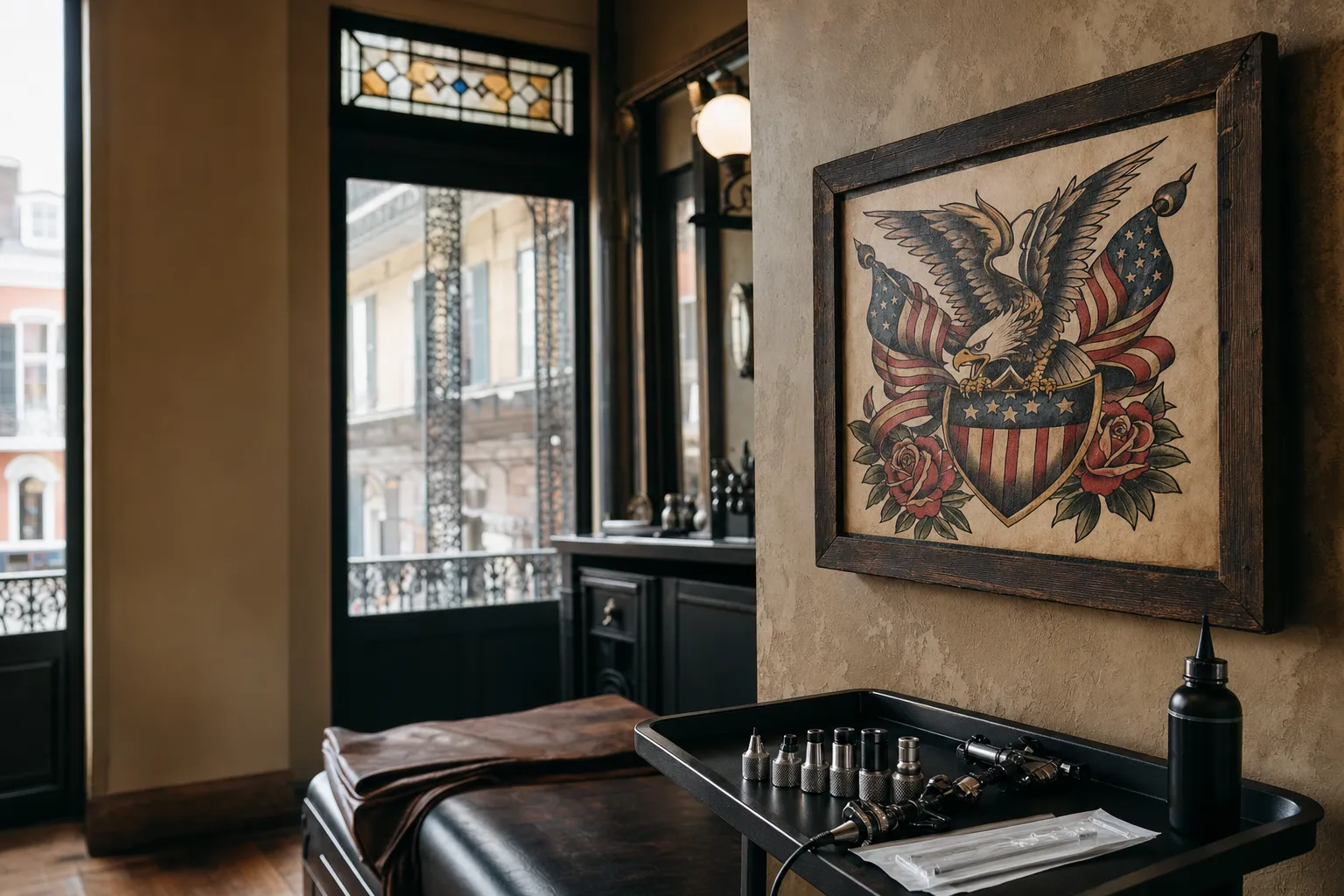
No, most tattoo myths are exaggerated or misunderstood. We explain which common beliefs are false, which are partly true, and what you should focus on before getting ink in New Orleans.
Quick answer you can quote
Short answer: Most popular tattoo myths are either wrong or only true in specific situations. The reliable markers of a good tattoo are the artist's skill, a clean studio, accurate aftercare, and realistic expectations about size, placement, and style.
Below we unpack the myths we hear most often, why they persist, and how to make choices that lead to tattoos you will still appreciate years from now.
Common tattoo myths and the real story
Myth 1: Small tattoos do not hurt
Verdict, partly true. Pain depends on placement, your pain tolerance, and the artist's technique. A small piece on the outer arm may be quick and mild, while a small piece on a rib or the side of a foot can be much more sensitive. Pain is not a reliable indicator of quality.
Myth 2: Black ink never fades
False. Black ink holds up better than many colors, but all tattoos fade over time from sun exposure, skin turnover, and friction. Proper placement, sun protection, and touch ups when needed matter more than assuming any color is permanent without maintenance.
Myth 3: Tattooing over scar tissue is impossible
Partly true. Scar tissue takes ink differently. Some scars accept tattooing well, others do not. We evaluate scars in person to advise on design, placement, and whether to test a small area first.
Myth 4: You can tell a great artist by price alone
False. Price reflects many factors including artist experience, demand, and shop economics. Look at the artist's portfolio for consistent work in the style you want, not just a low or high price tag.
Myth 5: All studios use the same hygiene practices
False. Hygienic practice varies. Ask whether a studio uses single use needles, disposable barriers, and follows local public health rules. We follow single use, disposable procedures and maintain a clean studio for every guest.
Myth 6: Touch ups mean the artist did a poor job
False. Touch ups are a normal part of tattoo maintenance, especially on delicate lines and in areas with high wear. A responsible artist will explain the expected healing and any potential need for a minor touch up.
Why tattoo myths spread
Myths persist because of varying experiences, social media, and differences between styles. A story about a bad experience travels fast online, and people generalize from single incidents.
- One off experiences become rules when retold.
- Social media highlights dramatic outcomes and not the everyday, careful work.
- Regulation and studio practices differ by state and even by city.
For a general overview of tattoo history and terminology, see the Wikipedia article on tattoos, which helps explain how practices evolved.
What really matters when you get ink
Separate the noise from the essentials. Focus on these five things.
- Artist skill in the exact style you want. Review portfolios for fine line work, American traditional, or photo realistic pieces depending on your plan.
- Clean studio practices and single use disposables. This affects infection risk and long term healing.
- Realistic placement and sizing. Small designs need space to breathe; fine detail requires a larger canvas.
- Clear aftercare instructions and expected healing timeline so you know what to watch for.
- Communicative collaboration so the final design reflects your idea and the artist's experience.
Pro tip: Bring images of styles you like, not finished tattoo pictures alone. We combine references with placement photos to adapt a design that works with your anatomy.
How we approach myths at Salon De Tatouage
We hear these myths every week from locals and visitors. At Salon De Tatouage we respond with clear, practical guidance and visible standards.
- We show work in the styles we do most, including fine line tattoos, hand tattoos, and photo realistic tattoos. See our photo realistic tattoos page for examples.
- We explain healing and touch up expectations during consultation so you know what is normal for your piece.
- We maintain single use needles and disposable setup for every session, and we are licensed and insured in Louisiana.
- We welcome walk ins from French Quarter visitors and New Orleans locals, while balancing careful design time for custom work.
If you are new to tattooing, our first tattoo guide covers common questions, and our tattoo shop page explains how we structure visits for different kinds of work.
Checklist to separate myth from fact before you book
Quick myth check
- Does the artist have recent portfolio examples in the style you want?
- Does the studio use single use needles and disposable supplies?
- Can the studio explain expected healing and touch up policy?
- Is the design adapted to your body placement and skin type?
- Do you understand realistic color and longevity expectations for your chosen style?
When a myth becomes a safety concern
Some myths encourage risky behavior, such as DIY tattooing or trusting unlicensed operators. Those decisions can increase the chance of infection, poor healing, or a result you cannot easily correct.
Watch out: Avoid tattooing done in unsanitary conditions, by unlicensed operators, or with reused equipment. Local public health rules exist to protect clients, so choose studios that follow them.
Louisiana public health guidance on body art provides rules designed to keep clients safe. We follow local requirements and encourage you to check current guidance when researching shops.
How style changes myth relevance
Different myths matter more for certain styles. For example, fine line tattoos can blur if the design is too small, while photo realistic pieces need enough size to render detail. We review size and placement choices with you so the outcome matches your expectations.
For more on setting realistic expectations for photo realistic work, see our page on photo realism expectations.
Practical tips for myth minded clients visiting New Orleans
- Bring references. Include style examples and a photo of the placement area.
- Ask about healing. Expect clear aftercare and a realistic timeline for touch ups.
- Check portfolios in person. Photos online may not show texture and healed results.
- Think about sun exposure. The New Orleans climate affects color retention and fading.
Pro tip: If you are visiting the French Quarter, schedule time to review portfolios and plan placement rather than deciding on impulse after a night out. A thoughtful small piece often makes a better souvenir than a rushed large one.
Related pages to help you decide
Learn more on these pages we recommend: the tattoo shop overview, our first tattoo guide, and information specific to the French Quarter.
Frequently asked questions
Are tattoo myths true about infection risk?
Some myths understate the risk. Infection risk depends on hygiene, aftercare, and the client s health. Licensed studios that use disposable needles and provide aftercare instructions minimize risk.
Will black ink always look the same over time?
No. Black holds up better than many colors, but sun and friction cause gradual fading. Placement and sun protection are the main factors you can control.
Can I tattoo over a scar?
Possibly. Scar tissue behaves differently. An in person evaluation helps determine suitability and design choices.
Do touch ups mean the artist made a mistake?
Not usually. Touch ups are often part of normal healing, especially for very fine lines or areas that experience wear.
Is DIY tattooing safe if I sterilize equipment?
We advise against DIY tattooing. Proper sterilization requires training and equipment, and an untrained hand increases the chance of poor results and complications.
Key takeaway
Most tattoo myths come from mixed experiences and exaggeration. Focus on artist skill, studio hygiene, realistic size and placement, and clear aftercare. That is what determines how your tattoo looks and heals.
Frequently asked questions
How should I choose between fine line and traditional styles?
Choose by looking at healed examples in an artist s portfolio and considering how the style will age in your chosen placement. Fine line requires careful sizing to stay crisp; traditional work often fares better in high wear areas.
Does the Louisiana health department regulate tattoo studios?
Yes. Louisiana public health rules set minimum standards for body art safety. Check local guidance when researching shops.
Want to read our reviews or plan a visit?
Check Salon De Tatouage s Google Business Profile to read customer reviews and get directions. For more about our work, see our tattoo shop page and our first tattoo guide.