
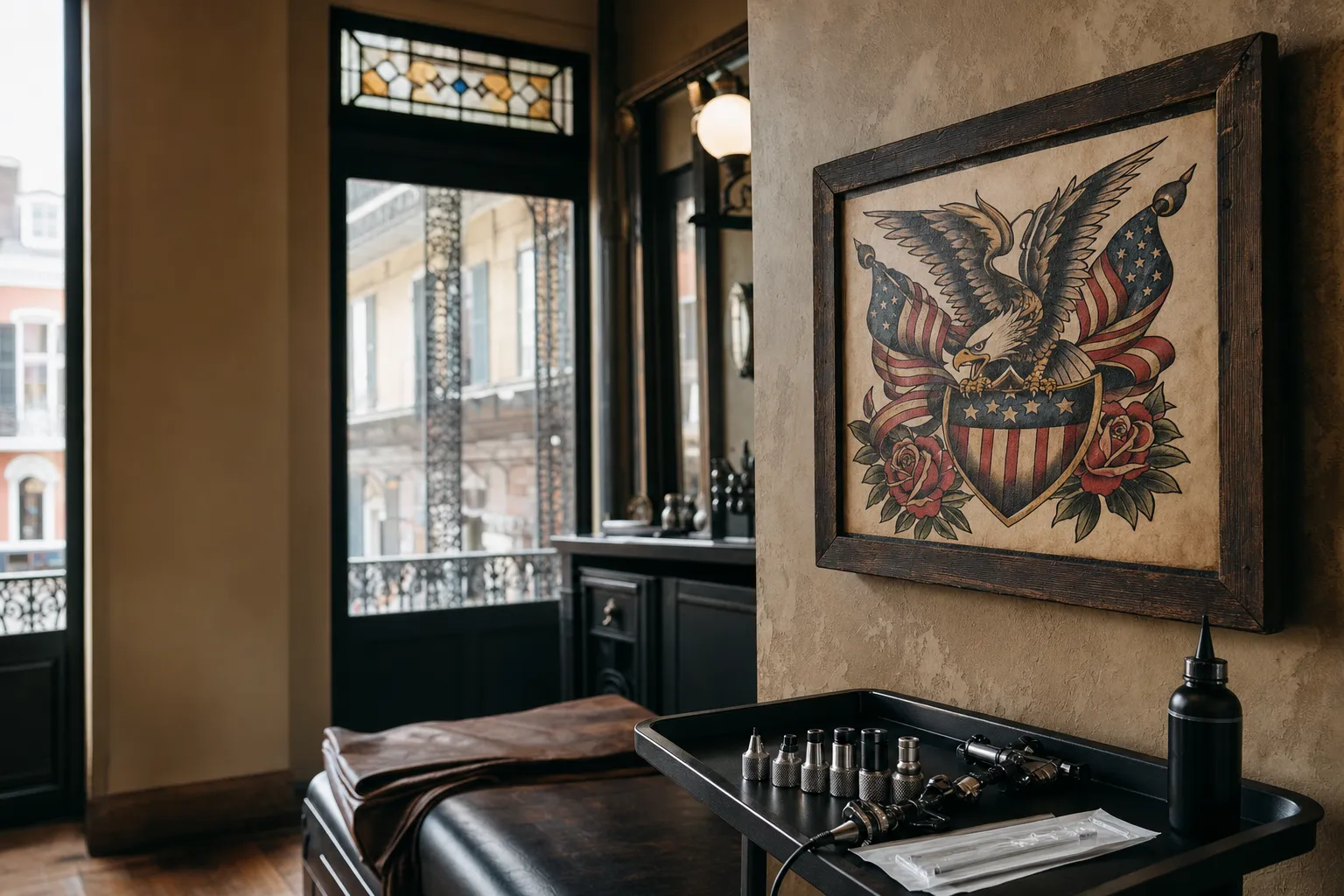
To keep tattoo color bright in Belle Chasse, the most important factors are pigment quality, correct needle depth and technique, placement on the body, and consistent aftercare. At Salon De Tatouage we focus on high quality pigments, precise fine line and color packing technique, and clear aftercare guidance so your color lasts longer.
Why tattoo color fades
Tattoo ink sits in the dermis, a layer of skin that changes as you age. Over time ink particles shift, break down, or are carried away by the body s immune and repair processes. Several things speed that process up:
- Sun exposure. Ultraviolet light breaks down pigments and causes color to wash out.
- Placement and friction. Areas that rub against clothing, jewelry, or repeated motion fade faster, for example hands, knuckles, and feet.
- Skin type and tone. Oilier or very dry skin, and skin with certain tones, can affect how pigments settle and appear.
- Ink color and formulation. Lighter pigments, yellows and pastels fade faster than saturated blacks and some blues and greens.
- Technique and depth. Ink placed too shallowly will blur and fade. Too deep and it can spread into the surrounding tissue.
How we reduce color loss at Salon De Tatouage
We treat color retention as a design and technical problem. Our approach combines artist choices, studio practice, and client education.
- Consultation and design. We discuss your skin type, daily habits, and where the tattoo will live. That conversation drives choices about color palette, size, and placement.
- Pigment selection. We use trusted pigments that hold color well for the intended effect. For saturated color work we choose formulations that are known for stability under UV exposure.
- Technique and depth control. Our artists place ink at the consistent dermal plane for each skin type. Fine-line and photo realistic work require different needle groupings and layering than traditional color packing.
- Finish and protection during healing. We apply a breathable dressing and explain how to protect fresh color while the skin repairs.
- Aftercare coaching. We give a clear aftercare plan tailored to the tattoo s location, including sun avoidance and when to return for a check or touch up.
Practical choices that make the biggest difference
When you plan a tattoo that will hold color well, focus on three decisions up front.
- Location. If longevity of saturated color matters, avoid high friction areas such as the sides of fingers and the center of the palm. For bright, lasting color consider upper arm, chest, thigh or upper back.
- Size and detail. Small, extremely fine color work can lose saturation faster than larger pieces that allow denser pigment packing.
- Color palette. Work with your artist to choose pigments that read well on your skin tone. Deep jewel tones and contrast with black line work often keep their perceived brightness longer than very pale pastels.
Pro tip: If you want bold, lasting color in a small area, plan slightly larger line weights or more saturated fills. That gives the pigment room to settle without losing definition.
Special considerations for hand tattoos and fine line work
Hand tattoos and fine-line color tattoos are among the most common reasons clients ask about fading. Hands are washed frequently, exposed to sunlight and friction, and the skin there regenerates differently than on the torso.
- Hand tattoos often need more frequent touch ups to maintain saturated color.
- Fine-line color requires careful spacing and may look softer over time than bolder work.
- We discuss the tradeoffs during the booking so you can choose a style that fits how much maintenance you re willing to accept.
For examples of styles that match long term expectations, see our pages on Hand Tattoos and Fine Line Tattoos.
Pre tattoo skin care checklist
Before your appointment
- Hydrate the skin in the weeks before your appointment, but avoid heavy tanning or sunburn.
- Avoid prolonged exfoliating or chemical peels on the area for at least a week.
- If you plan a colorful piece on the hands or feet, expect to discuss touch up plans with your artist.
- Review our Pre Tattoo Skin Care guide for more preparation tips.
Aftercare actions that protect color
We give clients a clear aftercare plan tailored to the tattoo and your lifestyle. The basics that preserve color are simple but consistent.
- Keep the tattoo protected from direct sun during the healing window, and use strong daily sun protection once healed.
- Avoid soaking the fresh tattoo in pools, hot tubs or baths until it s healed.
- Follow the cleaning and moisturizing routine your artist prescribes to avoid scabbing that removes excess pigment.
- Bring the tattoo back for a check in the recommended timeframe so we can assess color retention and plan a touch up if needed.
Watch out: Tanning beds and heavy sun exposure are one of the fastest ways to degrade color. If you spend a lot of time outdoors in Plaquemines Parish or along the Mississippi Gulf Coast, plan higher maintenance or choose darker palettes.
What a touch up actually does
A touch up replaces pigment that did not settle or that the body has removed. It is a normal part of maintaining color, especially for hands, feet, and very fine work. We evaluate healed skin and match fresh pigment to the settled color, then add density where needed.
Because touch ups are about conservation rather than dramatic change, planning size and saturation up front reduces how often you ll need returns.
Key takeaway
Color retention comes from the combination of pigment choice, the artist s technique, sensible placement, and consistent aftercare. At Salon De Tatouage we guide those choices for lasting results, especially for clients traveling from Belle Chasse and across greater New Orleans.
Related services and where to learn more
If you re comparing options, our Tattoo Shop page explains how we work in the French Quarter studio. For specific aftercare routines see our Tattoo Aftercare topic. To explore locations and how we serve nearby communities including Belle Chasse, visit our Locations page.
We also offer custom work and designs that take color longevity into account. See our Custom Tattoos page for examples of how we balance color and composition for long term wear.
Frequently asked questions
How long should I expect color to remain bright?
There is no fixed timeline. With proper pigment, placement, and aftercare, color can remain vibrant for many years, but exposure to sun and friction gradually reduces saturation. Hands, feet and areas with heavy wear usually need touch ups sooner than torso or thigh pieces.
Do certain colors fade faster than others?
Yes. Pale yellows and some pastels tend to fade faster than saturated blues, greens, and blacks. Artists choose pigments that both match your design and perform well over time.
Can I prevent fading entirely?
Preventing fading entirely is not possible because skin changes and the body moves pigment over time. You can slow fading by avoiding sun, following aftercare, choosing the right placement and working with an experienced artist who controls pigment depth.
Are hand tattoos worth it if they fade faster?
Many clients choose hand tattoos for their visibility and meaning, and accept periodic touch ups as part of ownership. If low maintenance is a priority, consider a nearby placement that receives less friction.
Will touch ups match the original color?
A skilled artist will match settled pigment closely, but healed skin tone and the existing pigment s condition affect the final look. We assess healed tattoos in studio and recommend the best approach for color matching.
Find out more and read recent client experiences
See our Google Business Profile to read client reviews and get directions, and explore our related pages on tattoo aftercare, pre tattoo skin care, and custom tattoos to learn more about preserving color.