
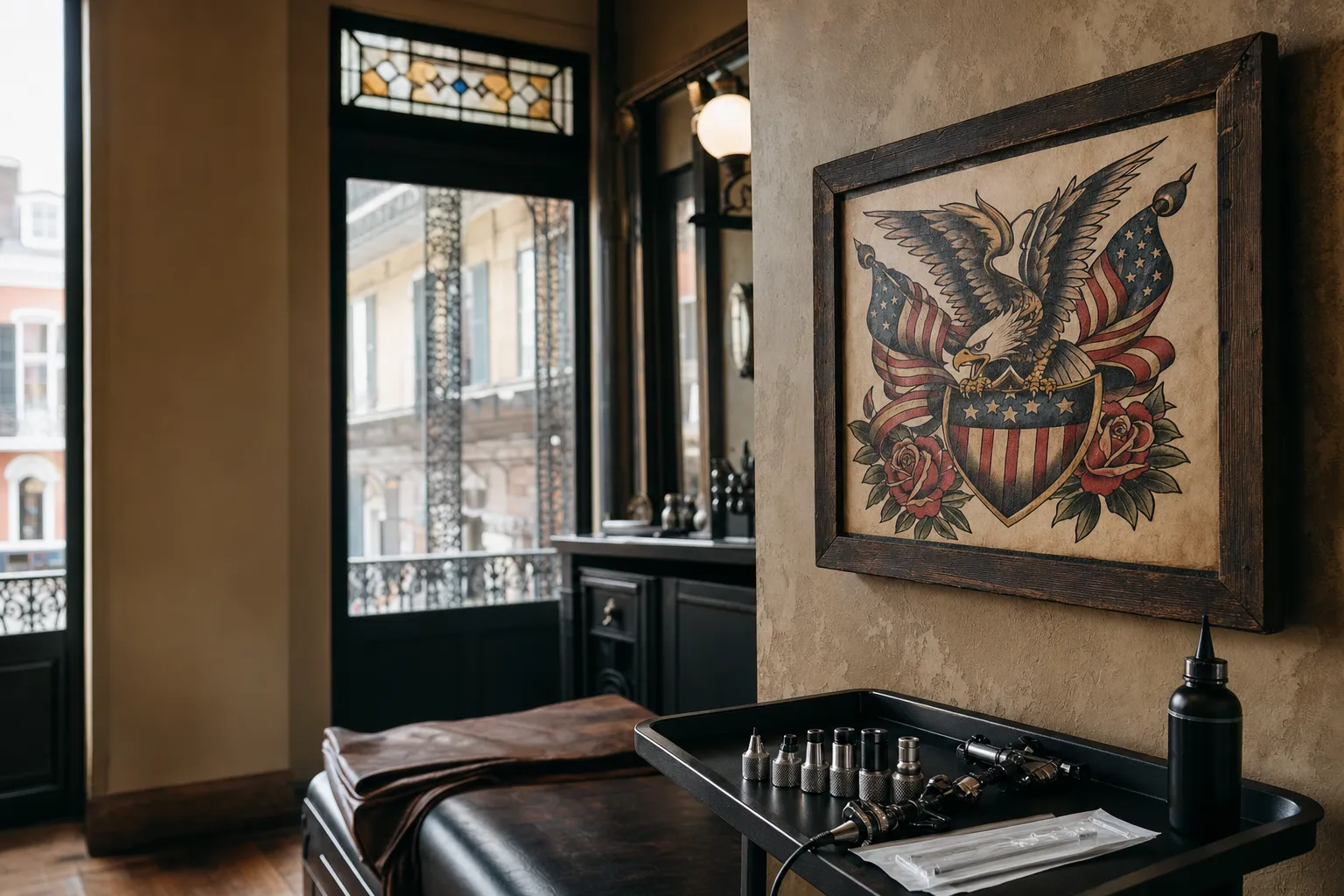
Color retention is how long pigment stays visible and vibrant in a tattoo. We answer this plainly: color lasts best when the ink and technique match your skin and placement, when healing and aftercare are done properly, and when long term wear is managed with sun protection and occasional touch ups. In Garden District New Orleans conditions like sun exposure and frequent outdoor wear make those choices especially important, and at Salon De Tatouage we plan artwork and aftercare to protect color from day one.
What is tattoo color retention
Color retention is the term we use for two related things. First, it is initial vibrancy, the way pigment looks once a tattoo is healed. Second, it is how well that vibrancy holds up over months and years. Both depend on the same factors, so we treat them together during design and application.
Quick definition you can quote
Color retention is the long term staying power of tattoo pigment, determined by ink formulation, placement, artist technique, skin biology, and how the tattoo is cared for while it heals and afterward.
Why color retention matters in New Orleans and Garden District
New Orleans has bright sun, humid summers, and a culture of outdoor life. In the Garden District many clients spend time outside on porches, walking Lafayette Cemetery, or attending events. Those conditions increase UV exposure and friction, which both accelerate fading. Color retention shapes design choices, placement recommendations, and aftercare plans we make with you.
We also balance aesthetics and longevity. Some color palettes sparkle when new but soften quickly. Other approaches, including strong line work and selective use of color with black and grey anchors, keep a tattoo readable and attractive for longer.
Key concepts that affect color retention
- Ink formulation. Pigments vary by color, particle size, and carrier solution. Some bright colors fade faster than others. We choose inks known for stable pigments and that suit your skin tone.
- Tattoo depth and technique. Ink must be placed consistently into the dermis. Too shallow and pigment drops out. Too deep and the result blurs. Experienced needle control and proper equipment are essential.
- Skin type and tone. Oilier or drier skin, and different melanin levels, affect how pigment settles and how vibrant certain colors appear.
- Placement and friction. Palms, fingers, and areas with frequent rubbing are harder on color. Hands and the outer wrist need special consideration.
- Sun exposure. UV rays break down pigment molecules. Tattoos exposed to sunlight will fade faster without protection.
- Healing and aftercare. How you care for a fresh tattoo in the first two weeks determines how much pigment becomes permanent versus lost in scabbing or infection.
- Touch ups. Some color loss is normal. Scheduled touch ups bring vibrancy back without altering the original design.
How we maximize color retention at Salon De Tatouage
We combine design choices, technical skill, and clear aftercare guidance to protect color. Here is how we approach each stage.
- Design planning. We start by discussing how the tattoo will age. For high wear areas we recommend stronger outlines and selective color placement. For color forward pieces we adapt palettes to skin tone and lifestyle.
- Ink selection. We use professional grade pigments chosen for stability with the colors you want. We select colors that are known to hold their tone on your skin type.
- Technique and depth control. Our artists place pigment at a consistent depth so color embeds cleanly in the dermis. That technique reduces blowouts and loss of saturation.
- Hygiene and studio practices. Our studio uses all disposable equipment and follows strict sterilization routines. Clean technique prevents complications that can rob pigment from the tattoo.
- Aftercare instructions. We give clear, practical aftercare guidance and follow up recommendations. Proper cleaning, moisturizing, and avoiding sun and soaking during healing are the biggest behavior changes that protect color.
- Touch up planning. We discuss realistic timelines for touch ups and how touch ups are a normal part of preserving color, especially for hand tattoos and sleeve edges.
We are licensed and insured, and we tailor every plan to your skin, placement, and schedule so color retains as long as possible.
To learn more about our studio approach to appointments see our Tattoo Shop page, and for specific healing steps see our topic page on Tattoo Aftercare.
Before your appointment checklist
Prepare skin and schedule
- Be well rested and hydrated in the days before your session.
- Avoid direct sun or tanning on the planned area for at least a week.
- Skip heavy exfoliation, chemical peels, or new topical products on the area within one week.
- Tell us about any medications or skin conditions so we can plan safely.
- Plan clothing that gives easy access and minimizes rubbing during healing.
Color versus black and grey, a practical comparison
| How they age | Color tattoos | Black and grey tattoos |
|---|---|---|
| Initial vibrancy | Bright and eye catching, especially on lighter tones | Strong contrast and definition from the start |
| Long term retention | Some hues fade faster, requiring touch ups | Generally holds contrast longer, though grey can soften |
| Best placements | Areas with less friction and sun exposure | Works well across most areas, including higher wear sites |
Common questions we hear from clients in Garden District
Will my color fade faster if I live in New Orleans
Sun and humidity influence fading. New Orleans sunlight increases UV exposure. That means we recommend sun protection after healing and design choices that compensate for outdoor lifestyles.
Do hand tattoos keep color
Hands are one of the toughest locations for color retention because of constant use and washing. We discuss alternatives and touch up expectations during design. See our Hand Tattoos service to review placement options.
How soon can I get a touch up
We usually wait until the tattoo has fully settled, often a few months. Touch up timing depends on healing and how much pigment was retained.
Can I get color on darker skin tones
Yes. We adapt palettes and contrast to skin tone so color reads well. Some shades show differently on higher melanin, so we plan a palette that produces the look you want over time.
Related services and where they matter
Color retention planning ties directly to the services we offer. For custom pieces we design with longevity in mind. For fine line work we choose inks and line weight to protect detail. For hand tattoos we review placement and realistic expectations.
- Custom Tattoos for tailored palettes and design choices.
- Fine Line Tattoos when subtle color and crisp detail are the priority.
- Hand Tattoos with clear guidance on touch ups and maintenance.
Related locations we serve
We work with clients across New Orleans and the surrounding neighborhoods. If you are visiting the French Quarter or spending time in the Garden District, tell us where you will wear the tattoo so we can advise on placement and aftercare. Learn more about visiting us from the French Quarter and New Orleans pages.
Helpful resources and further reading
- Alliance of Professional Tattooists, aftercare and professional standards.
- American Academy of Dermatology, guidance on sun protection and skin health.
- University resources on wound healing and skin, which explain how pigment becomes permanent as skin remodels.
Pro tip: Once a tattoo is fully healed, broad spectrum SPF is the single most effective daily habit to protect color while you soak up New Orleans life.
Common misconceptions about color retention
- Myth: If a color looks bright right away it will stay that way. Reality: Initial brightness is not the same as long term stability.
- Myth: Darker skin cannot wear color. Reality: Color can be beautiful on all skin tones with adapted palettes.
- Myth: Once healed there is nothing you can do. Reality: Sun care, moisturization, and periodic touch ups all preserve color.
Frequently asked questions
How long does tattoo color usually last before needing a touch up?
It depends on placement, color choice, and sun exposure. Many tattoos keep good color for several years, but hands and other high wear spots may need touch ups sooner. We discuss realistic time frames for your specific design during the appointment.
Does aftercare really change how color holds up?
Yes. Proper cleaning, avoiding soaking, and following moisturizing guidance during the first two weeks greatly increase the amount of pigment that stays in the skin.
Are some colors more likely to fade than others?
Certain bright pigments, especially some yellows and pastels, can fade faster. We choose pigments strategically and may combine them with shading and line work to keep the design readable over time.
Can touch ups restore color completely?
Touch ups can restore vibrancy and refresh edges, but they are most effective when planned as part of the long term care of the tattoo rather than as a correction for poor technique or aftercare.
Should I avoid getting a color tattoo in the Garden District because of sun and humidity?
Not necessarily. We will plan placement, palette, and aftercare to match your lifestyle. With the right approach color tattoos are common and successful in this area.
Key takeaway
Color retention is a mix of art and science. Choosing pigments, placement, and technique with your skin and lifestyle in mind, then following good aftercare and sun protection, is the best way to keep color vibrant. We design with those tradeoffs in mind so your tattoo looks like you intended for years to come.
Want to read reviews and get directions
Check our Google Business Profile to read recent reviews and see directions, and explore more about tattoo care and services on our site.